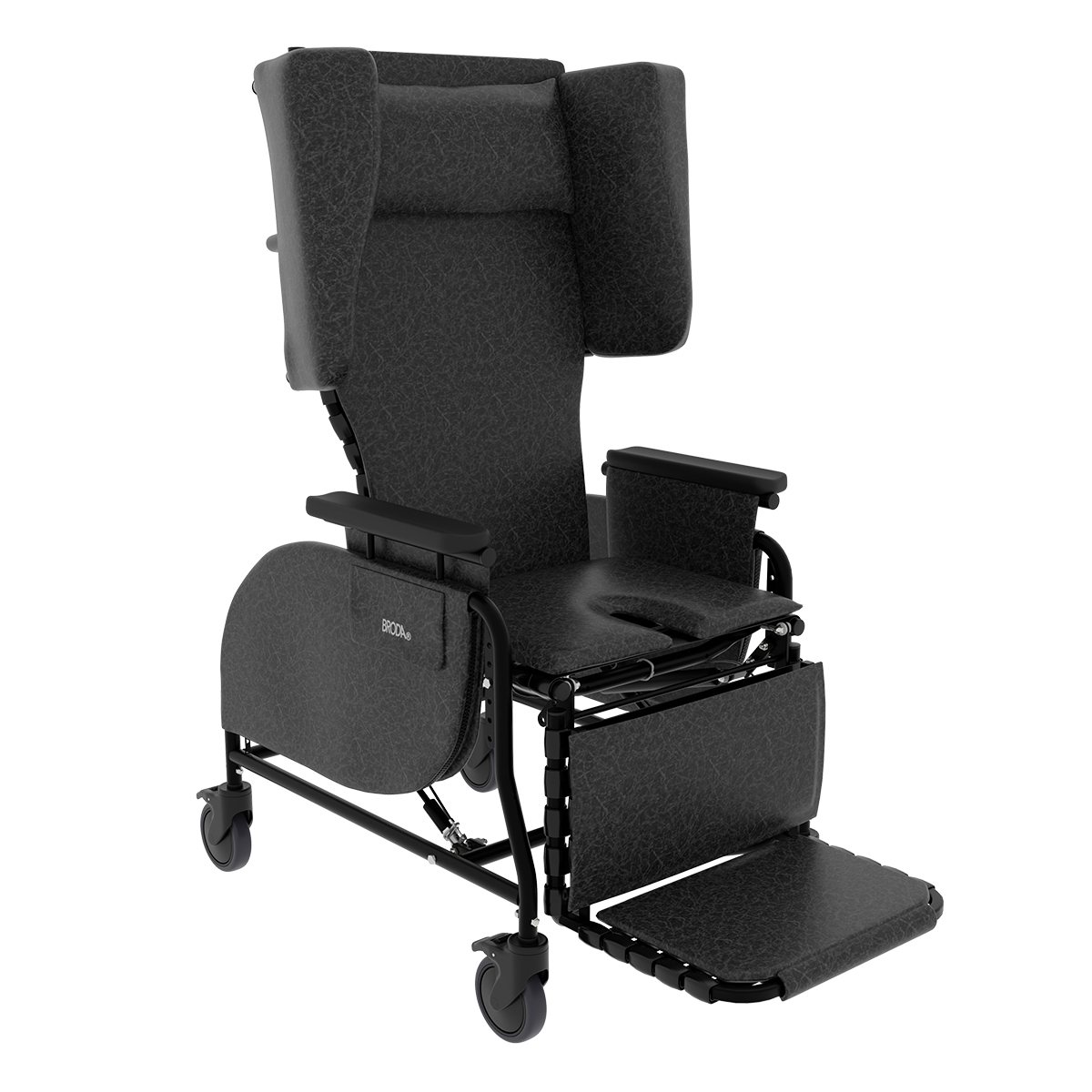
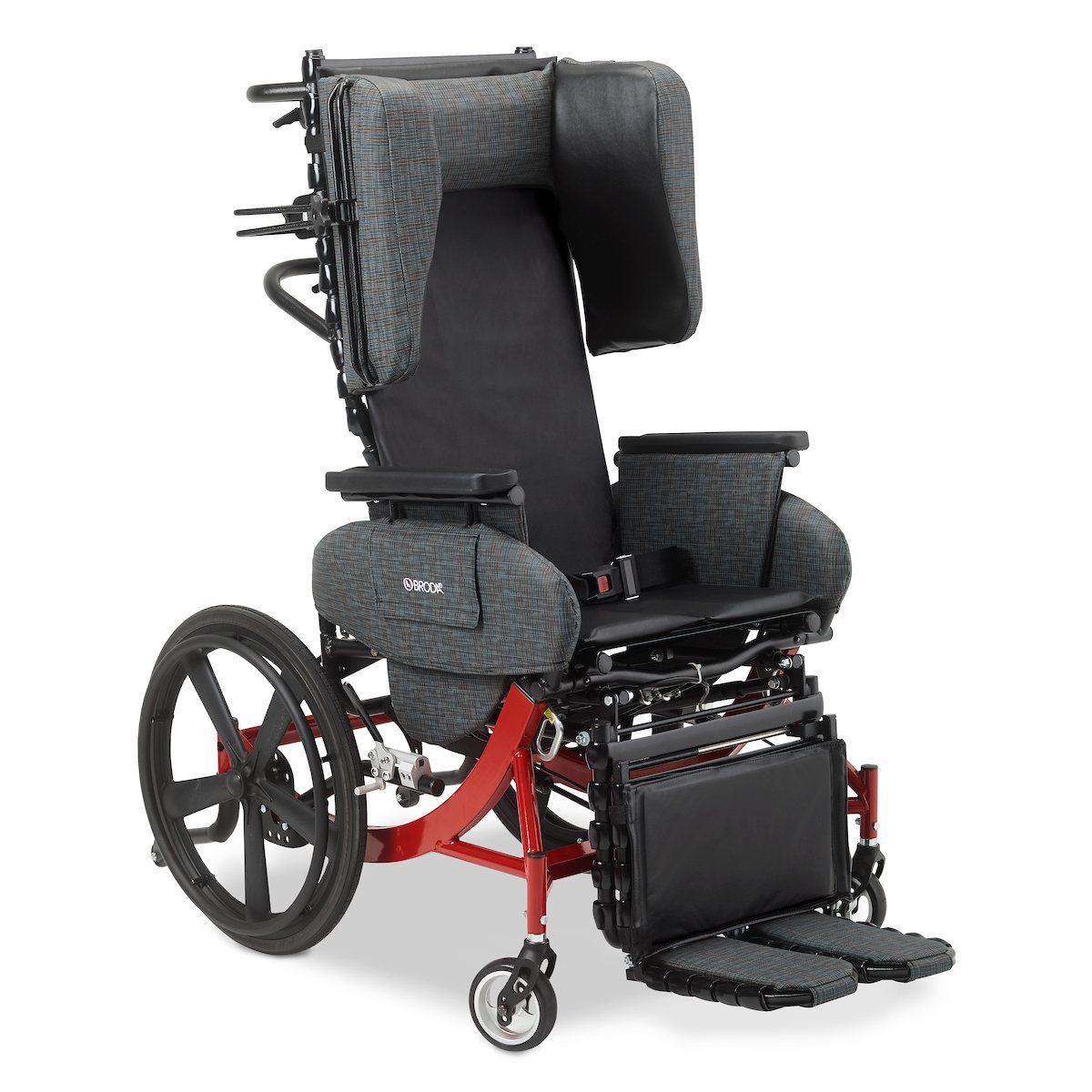
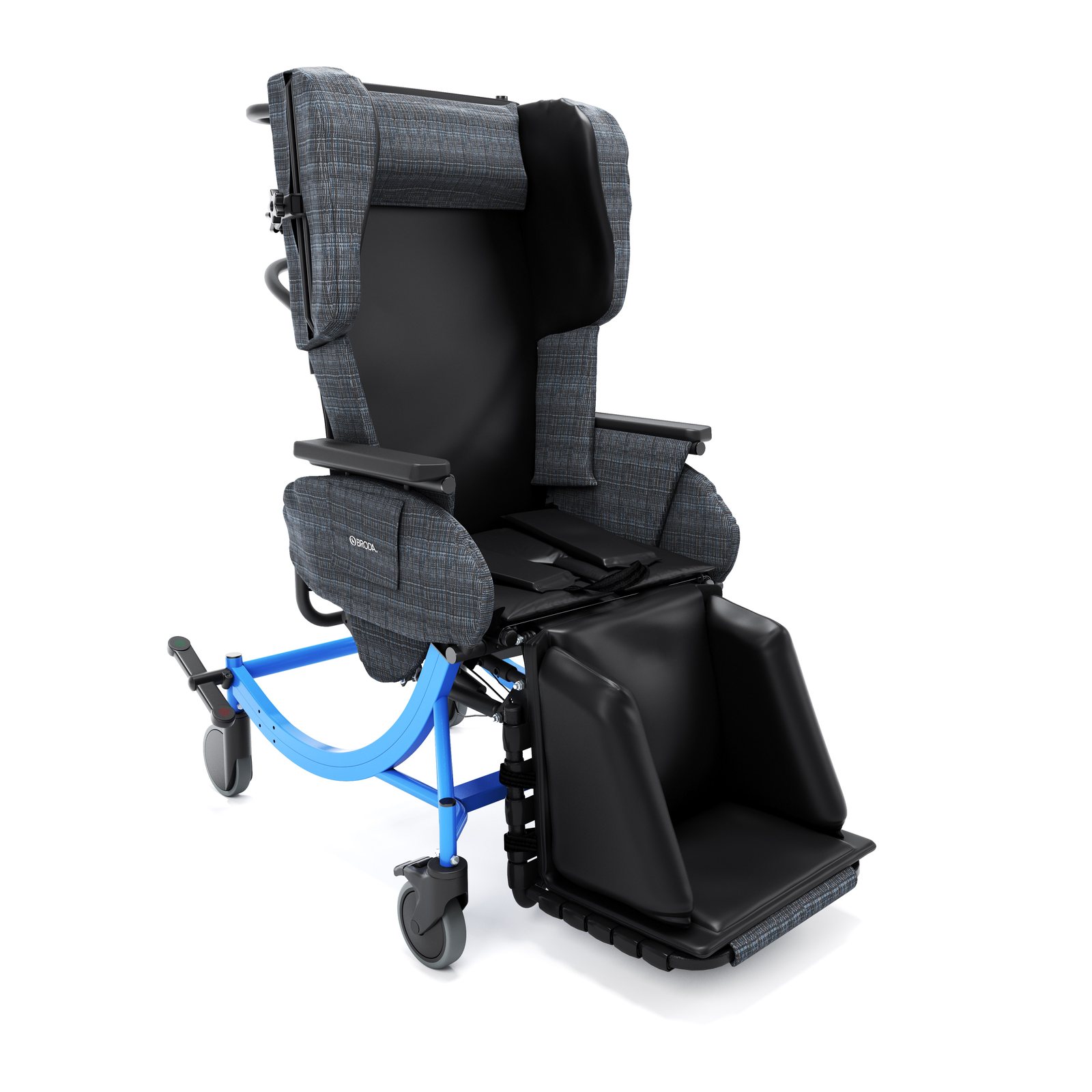
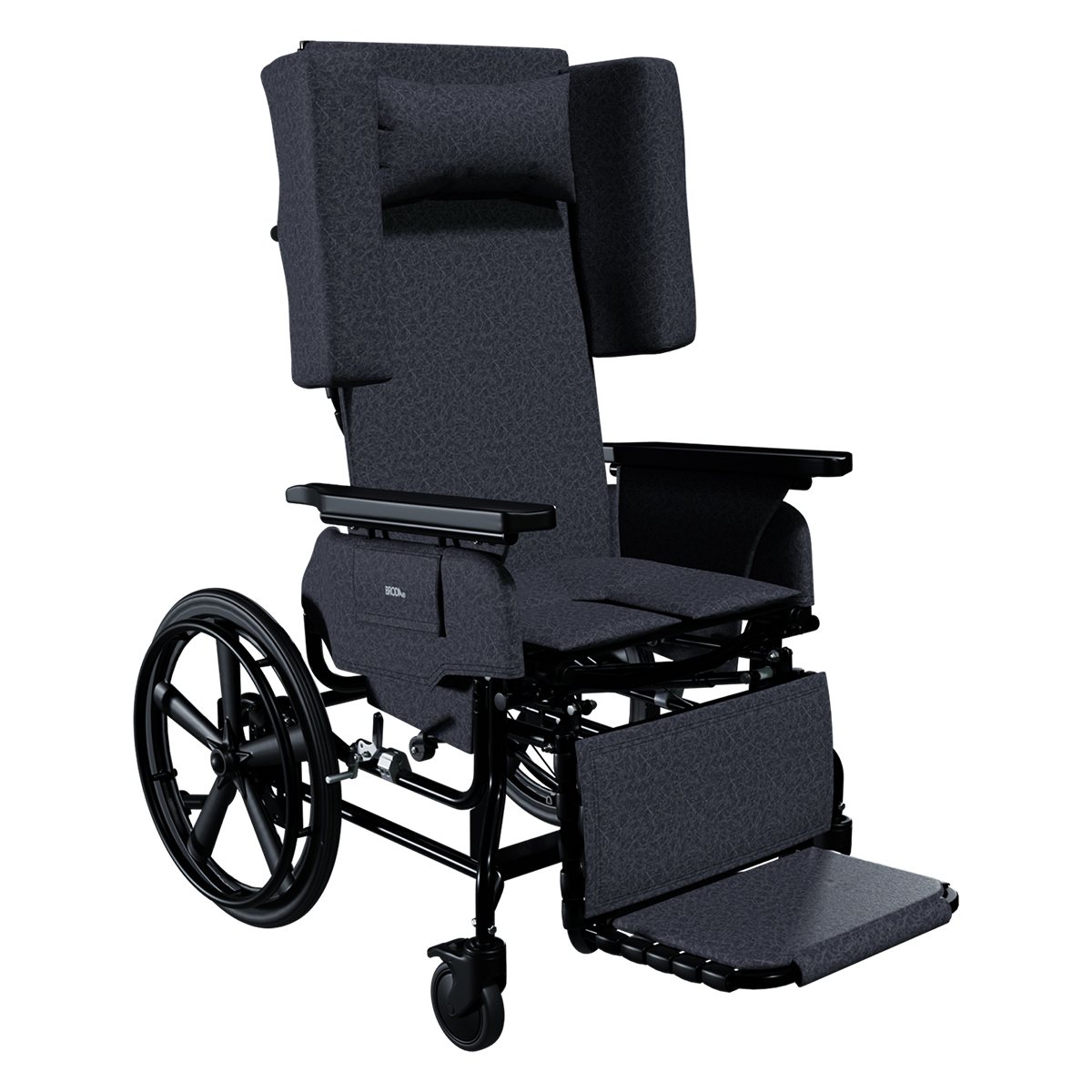
Tilt-in-Space Wheelchairs by Broda: Shipped Nationwide
What a Tilt-in-Space Wheelchair Does
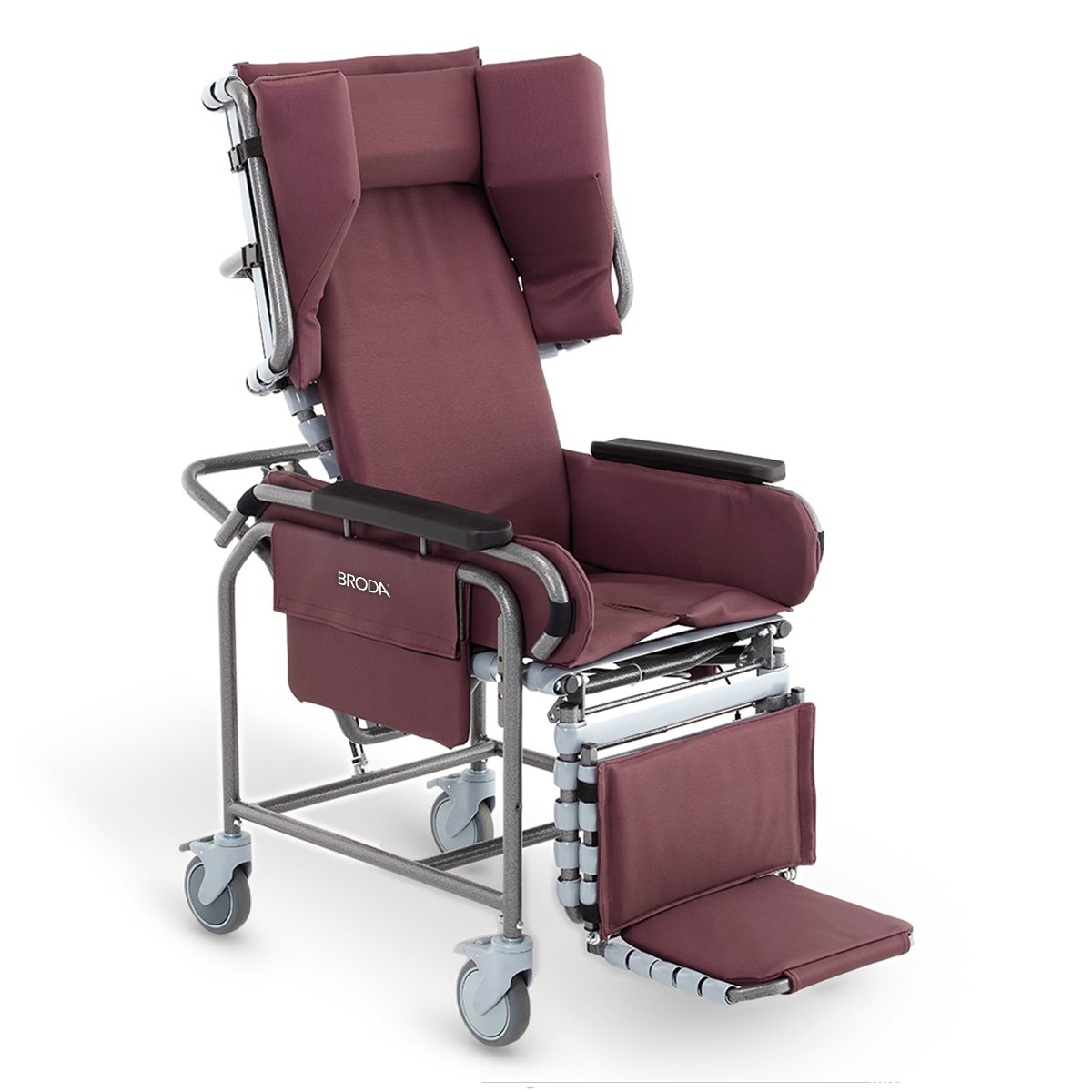
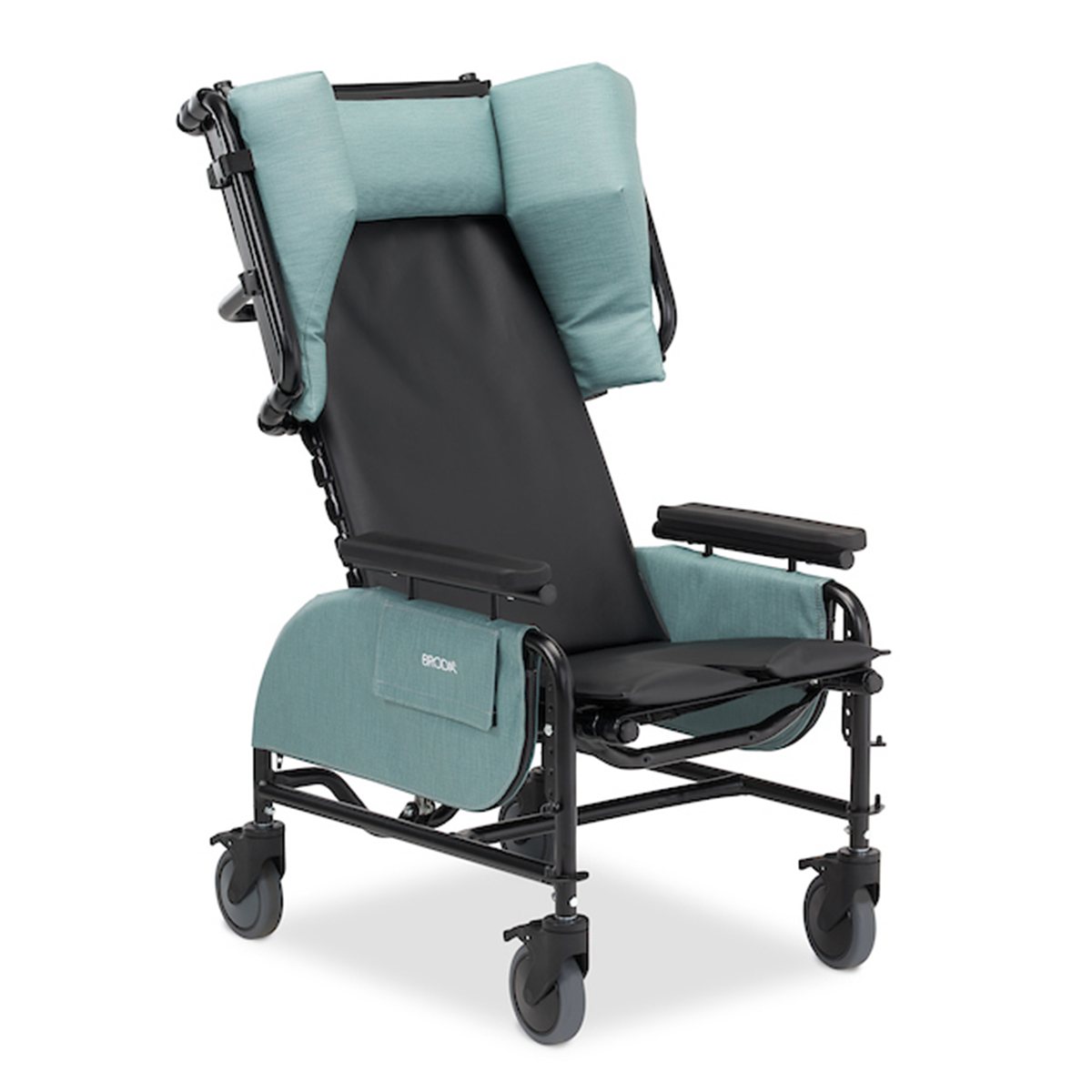
A tilt-in-space wheelchair rotates the whole seat as one unit. The hip, knee and back angles stay the same while the chair tilts backward. Body weight shifts off the buttocks and onto the back, which relieves pressure without the person sliding forward in the seat. People often search for it as a "tilt and space wheelchair"; it is the same chair. For anyone who sits for hours a day and cannot shift their own weight, tilt is the feature that keeps them comfortable, safe and out of bed.
ADL Solutions is a direct Broda Seating reseller. We supply the full Broda tilt wheelchair line to hospices, skilled nursing facilities, Assistive Technology Professionals (ATPs), hospitals and families, and we ship nationwide.
Tilt Wheelchair vs. Recline vs. Tilt-and-Recline
Tilt only (for example Broda Elite Tilt, Comfort Rehab, Sashay): the seat-to-back angle is fixed, and the whole chair tilts. Best for pressure relief and posture without shear.
Recline: opens the back angle. Useful for rest, hip-flexion limits and personal care, but used alone it can cause sliding and shear.
Tilt and recline (Broda Midline, Synthesis, Centric, Vanguard): both motions, so care staff can tilt for pressure relief, recline for rest, and on most models reach Trendelenburg positioning.
Who Benefits From a Tilt Wheelchair
Tilt-in-space seating is prescribed for people who cannot reposition themselves: advanced dementia, stroke, Parkinson's, ALS and MS, cerebral palsy, Huntington's disease, and anyone at risk of pressure injuries. Tilt also helps with breathing, swallowing and feeding, and lets a person see the room instead of the floor. In long-term care it is one of the most effective restraint-free ways to keep a resident safely seated.
Choosing the Right Broda Tilt Wheelchair
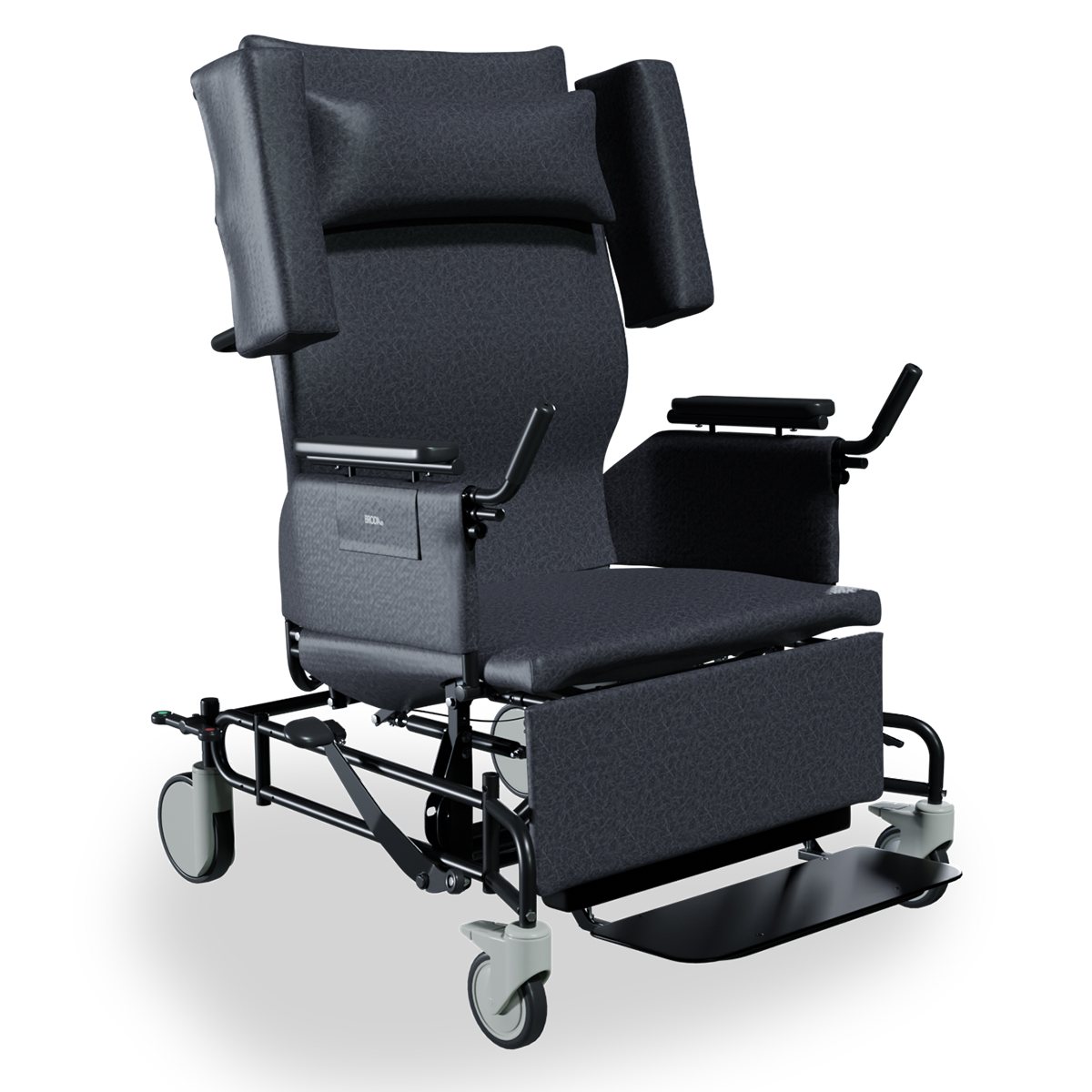
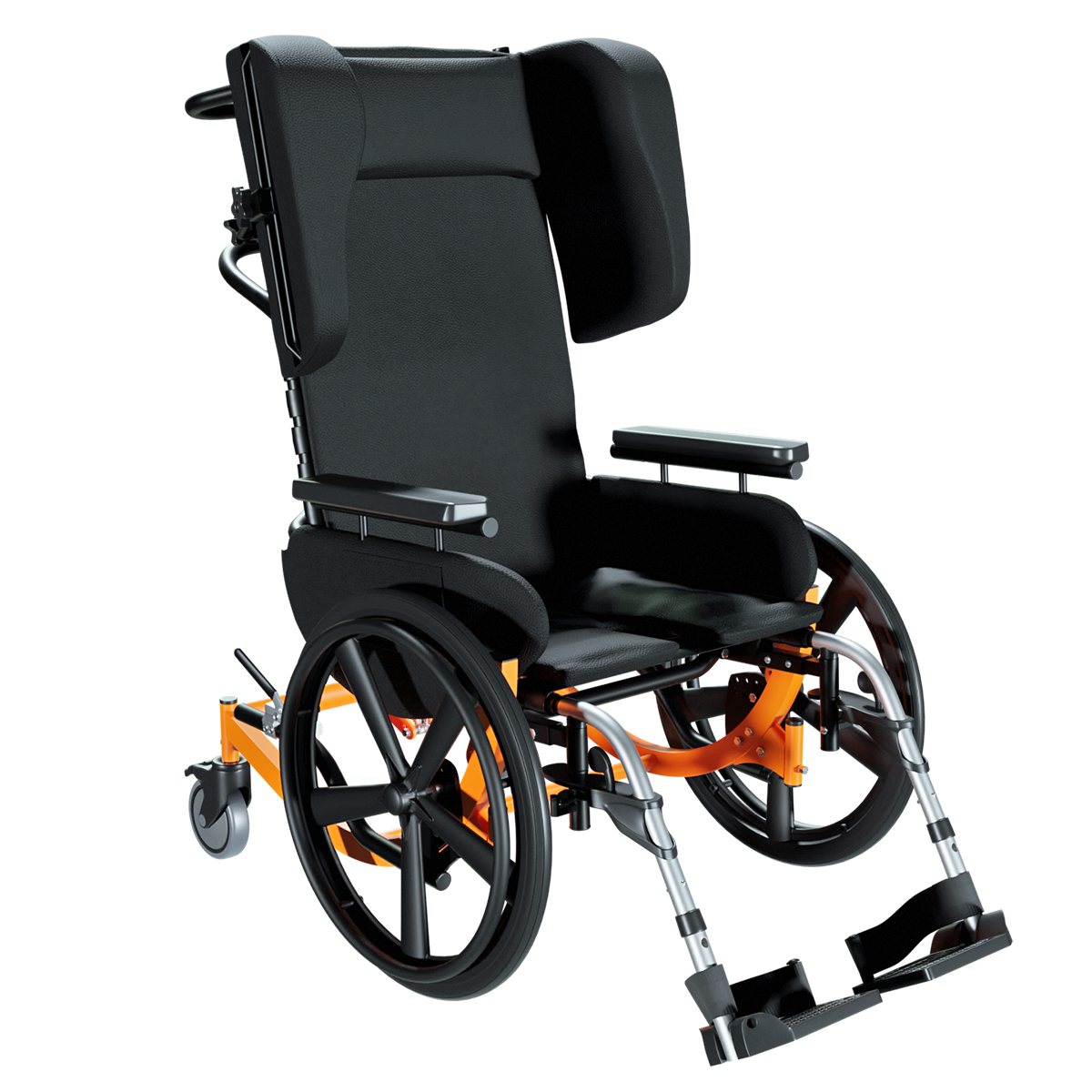
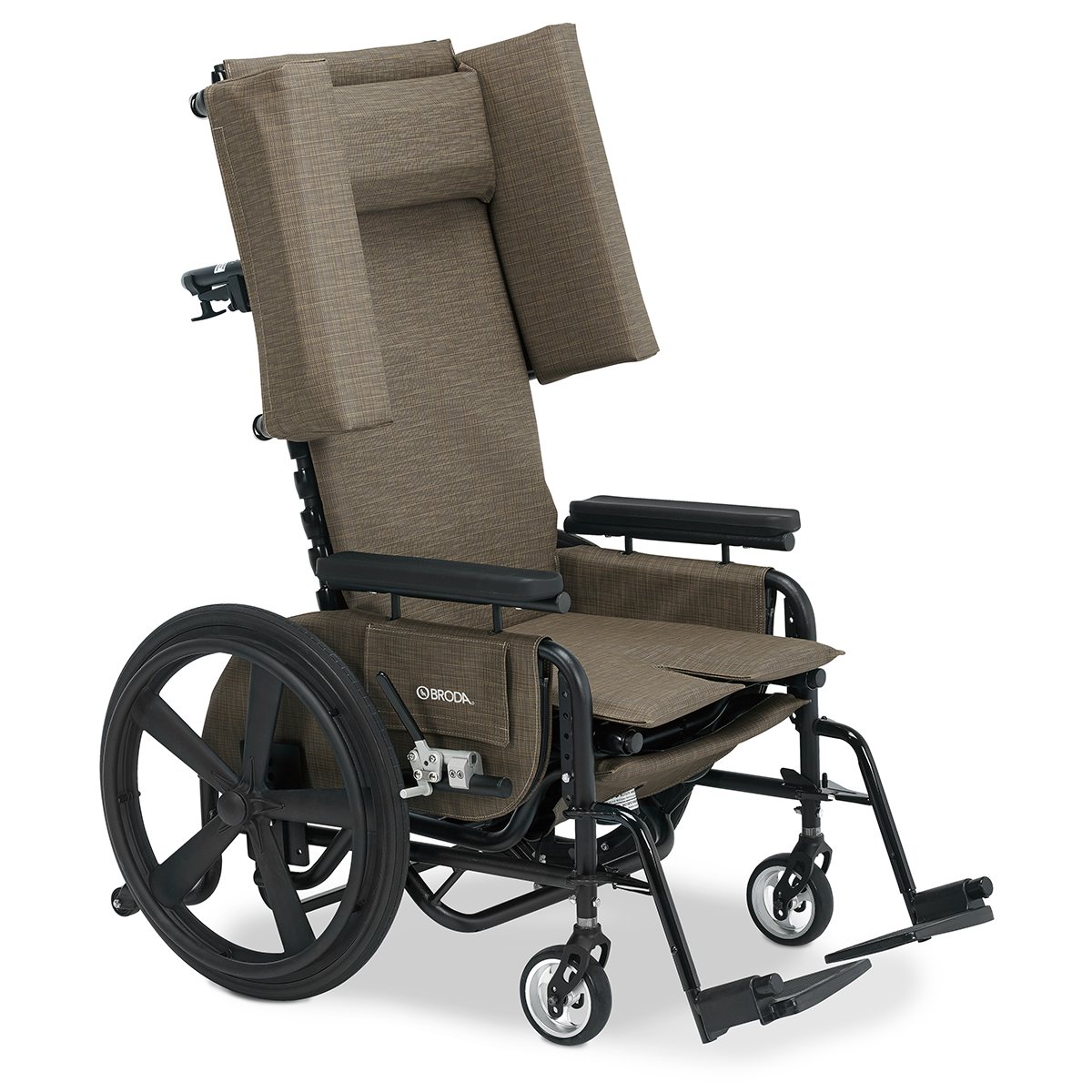
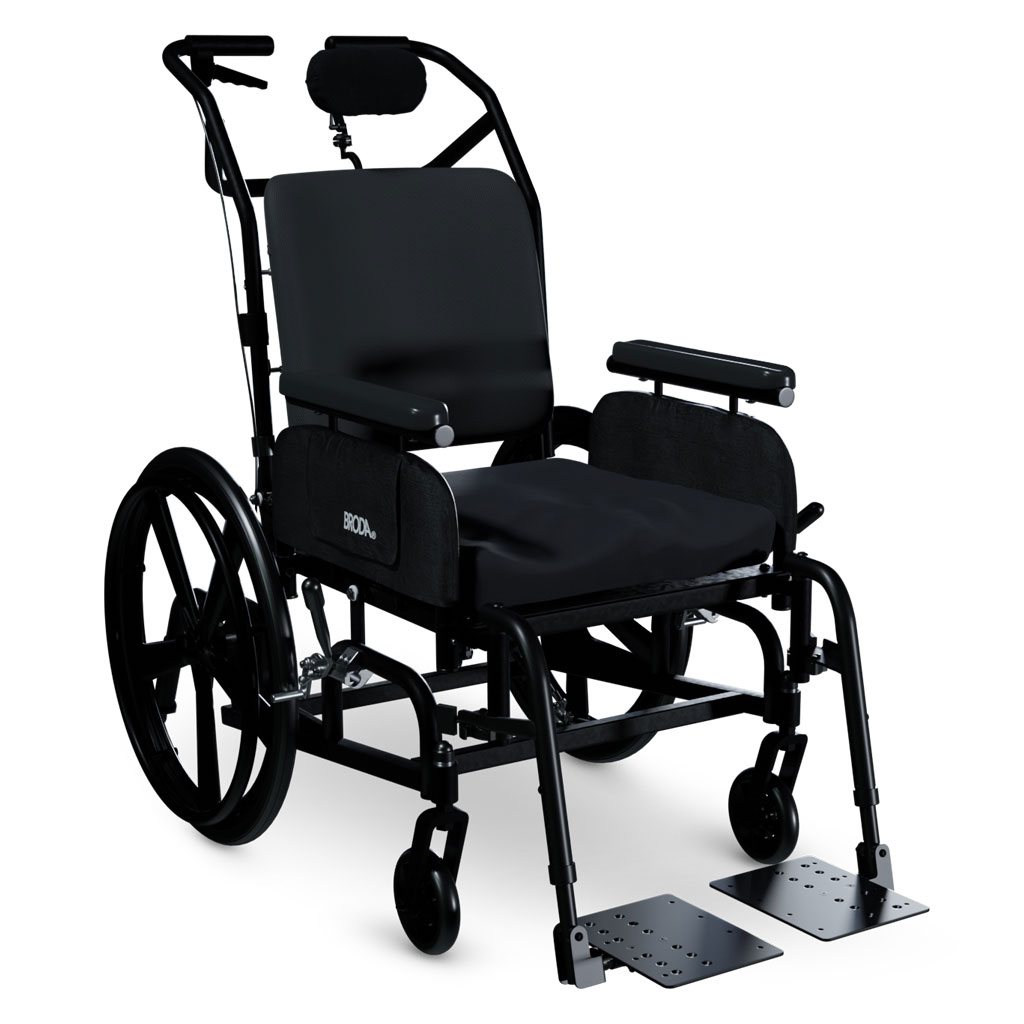
Broda tilt ranges run from about 18° on the self-propelled Sashay to 45° on the Comfort Rehab. Most positioning models offer 38–40° of tilt with up to 90° of back recline. The Vanguard is built for bariatric users up to 600 lb, and the pedal models (Encore, Latitude, Sashay) let a resident move the chair with their feet. Compare the models below, or call us. We match the chair to the person, the care setting and the budget.
Ordering for a Facility
We quote single chairs and facility-wide or multi-site orders alike, and ship to any U.S. address. In Arizona our own team can deliver, assemble, fit and train staff. We work alongside your therapists and ATPs on seat width, depth and accessories.
Frequently Asked Questions
Is a "tilt and space wheelchair" different from a tilt-in-space wheelchair?
No. "Tilt and space" is a common way of searching for the same thing: a wheelchair whose seat tilts as one unit while the body angles stay fixed.
Does Medicare or Medicaid cover a tilt-in-space wheelchair?
Coverage depends on the plan and the paperwork, which usually includes a physician, therapist or ATP documenting why the person needs the chair. Our written quote lists the exact model and options for that funding request.
Do you ship outside Arizona?
Yes. ADL Solutions ships Broda chairs nationwide to facilities and homes.
Can you handle large orders?
Yes. We quote facility-wide, multi-unit and multi-site orders of any size.
Direct Broda resellerADL Solutions buys direct from Broda Seating and sells the full Broda line: positioning and tilt-in-space wheelchairs, shower commodes and gliders.
We ship nationwideOrders ship to facilities and homes across the United States. In Arizona, our own crew can deliver, set up and fit the chair.
Built for volumeOne chair or a facility-wide rollout across multiple sites. Partner pricing is available for facilities, care organizations and multi-unit orders.
Skilled nursing & long-term careOut-of-bed seating for residents who can't sit safely in a standard wheelchair, with pressure redistribution and positioning without restraints.
Hospice & palliative careInpatient hospice units and home hospice programs keeping patients comfortable, upright and with their families instead of in bed.
ATPs & seating clinicsAssistive Technology Professionals and complex rehab suppliers who need configurable tilt-in-space and positioning chairs, delivered ready to use.
Memory care & assisted livingCalm, stable seating for residents with dementia or advanced Parkinson's, with tilt that settles and protects without restraint.
Behavioral healthDurable, auto-locking gliders (Tranquille, and Aspire for pediatrics) for psychiatric hospitals, crisis units and residential programs.
Huntington's disease programsThe HD-specific Synthesis, with padding and stability built for involuntary movement.
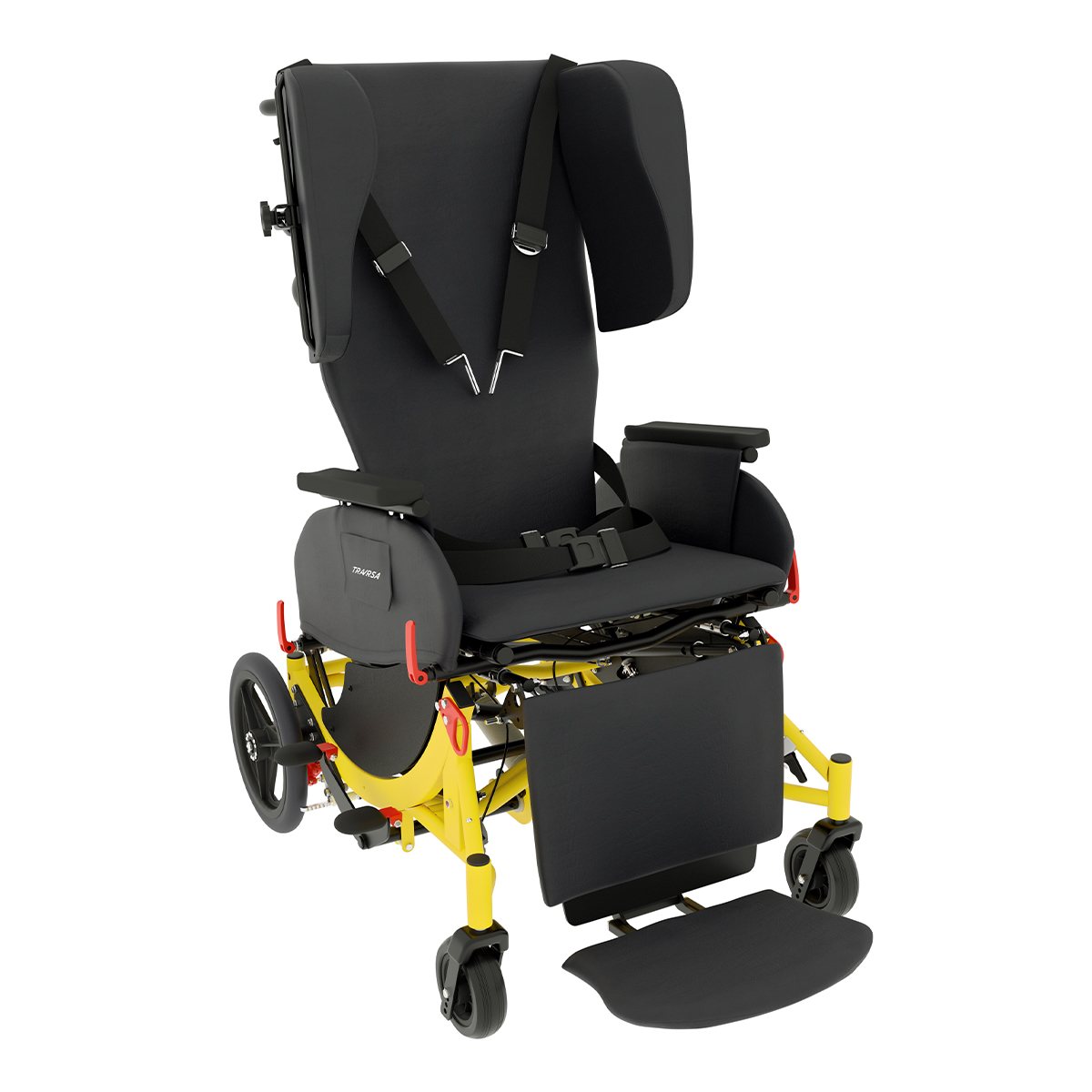
Hospitals & rehab unitsEarly-mobility seating, safe patient handling, and the Traversa transport chair as a stretcher alternative.
NEMT & dialysis transportModels with crash-tested, WC19-certified securement options for vehicle transport to appointments.
Families, VA, DDD & ALTCSPrivate-pay families and program-funded clients. In Arizona we also coordinate the home modifications around the chair.
Measurements are best taken by a physical or occupational therapist, or by an ATP (Assistive Technology Professional), a specialist certified to recommend wheelchairs and seating. In a care facility, the therapy department can usually do it. At home, ask your mother's doctor for a referral to a seating clinic. The assessor measures her while she is seated and notes how she holds her trunk and head.
Three numbers matter most. Seat width is taken across the widest part of her hips or thighs, with a little allowance for clothing. Seat depth runs from the back of her hips toward the back of her knee, stopping short of the knee itself. Broda builds most of its tilt chairs in 16, 18 and 20 inch widths, and the Elite Tilt also comes in a 24 inch width.
The third number is seat-to-floor height. If your mother still pushes herself along with her feet, the seat has to sit low enough for her feet to rest flat on the floor, which is why Broda's Sashay and Encore pedal chairs go as low as 12.5 inches. For a chair that staff push, the height is set around her leg length, the footrests and the height of the bed she moves to and from.
How Tilt Is Used Through the Day
A resident in a tilt wheelchair usually moves through a few positions in a day. The seat comes close to upright for meals and conversation, at whatever angle the nurse or speech therapist has set. Between activities it goes back further for rest, because Broda designs the tilt to move weight off the seat and onto the backrest. The care plan records both angles so every shift uses the same ones.
A day for your father might go like this. After morning care he is tilted back to rest. He comes forward again for lunch at the table. In the afternoon he joins an activity with a small amount of tilt, and Broda's front-pivot models are designed to keep his gaze on the room instead of the ceiling. Before bed, staff bring the seat back to upright for the transfer.
At home, keep the routine simple. Ask the therapist to show you two or three approved positions and how long to stay in each one. Write them on a card and tape it to the back of the chair, so a visiting relative or aide uses the same settings you do. If something looks uncomfortable, call the therapist before changing the plan.
Chair guides by condition
Each guide covers what matters in a chair for that diagnosis, which Broda models fit, and how to get the fit right.
Will a tilt wheelchair fit through the doorways in our house?
Measure your narrowest doorway first, which is often the bathroom. Then ask ADL for the overall width of the exact model and seat size you are considering, since the chair is wider than its seat. If a doorway is too tight, ADL also builds home accessibility changes in Arizona, including wider doorways, ramps and bathroom changes.
Can my father ride in a van while seated in his tilt wheelchair?
Only in a chair built and equipped for it. Broda offers an optional WC19 package on the Synthesis and the Elite Tilt, and the Traversa transport chair is crash-tested to WC19. WC19 is a standard for wheelchairs used as seats in motor vehicles. For any other chair, check with ADL and the transport company before he rides seated in it.
Should we order a wider seat so my mother has extra room?
Usually not. A seat that is too wide gives her room to lean to one side, and it makes the whole chair harder to get through doorways. A seat that is too deep can press behind her knees and pull her into a slump. Her therapist or ATP will choose the size that fits her now. If her weight changes, ask for a recheck.