After a spinal cord injury, a tilt-and-recline chair lets caregivers shift your son's weight on a schedule, and it can stand in while his power chair is repaired.
ADL Solutions, direct Broda Seating reseller. Published .
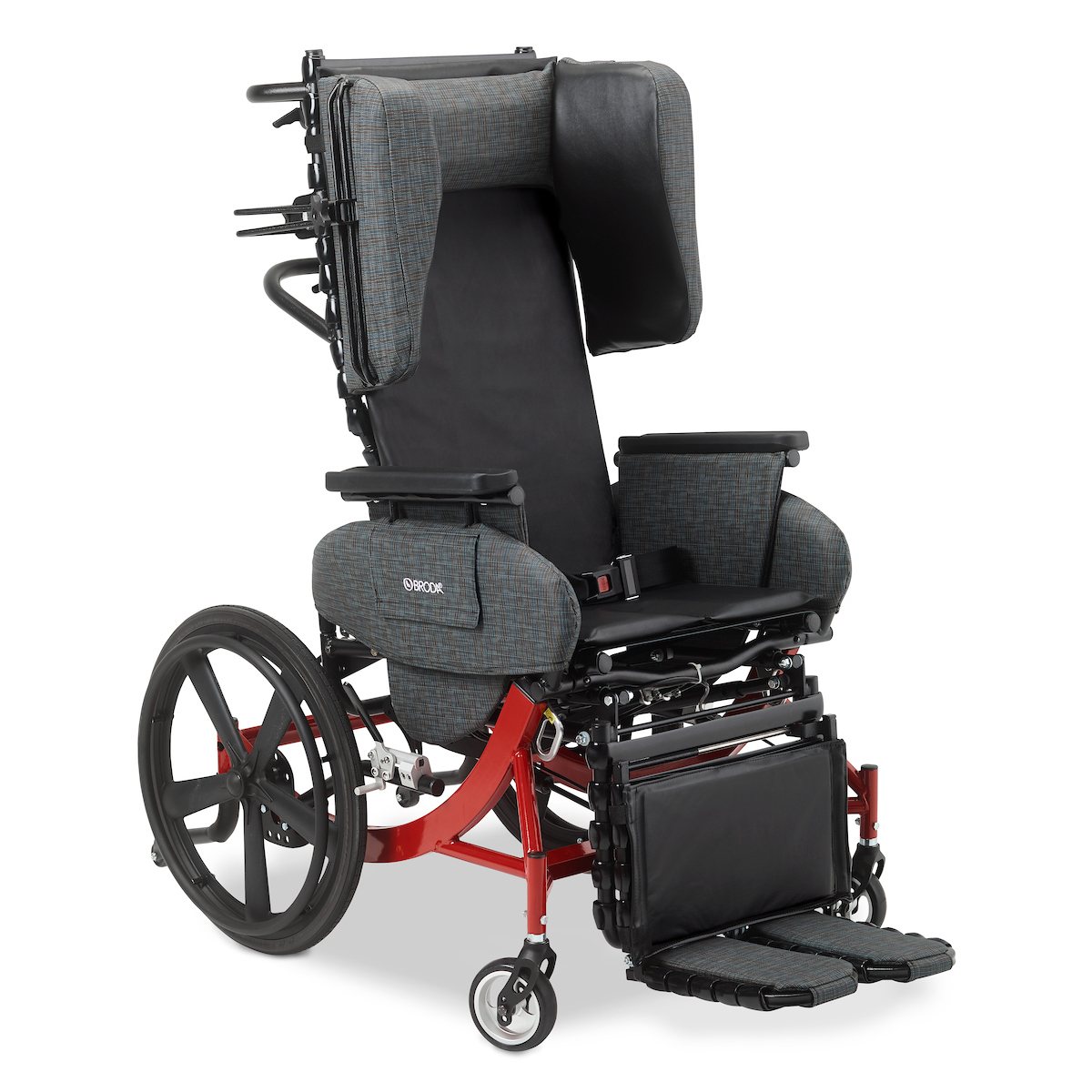
Broda Synthesis Positioning Wheelchair with Tilt & Recline (V4)
What matters in a chair for spinal cord injury
Weight shifts he cannot feel
Many people with a spinal cord injury have reduced feeling below the level of the injury. That means your son may not notice the ache that makes most of us shift in a seat. Tilt-in-space eases the entire seat backward while his body keeps the same seated shape, moving weight off his sitting bones. With Broda's positioning chairs, a single caregiver can make that change without help.
A backup for the power chair
Power wheelchairs need repairs, and a repair can leave him without a proper seat for days or weeks. A manual positioning chair keeps him up and supported while the power chair is in the shop. Choose one with tilt and recline, so his weight-shift and positioning routine can carry on as usual until his own chair comes back.
Bathing and bowel care
Personal care is where many of the day's transfers happen. A shower commode that tilts and reclines lets him stay seated and supported for showering and a bowel routine, with less lifting between surfaces. Broda's Revive has a stainless steel frame, offers 12 degrees of rearward tilt and has a backrest that reclines to 67 degrees. In Arizona, ADL can also change the bathroom so the chair fits.
Broda chairs to consider for Spinal cord injury
Prices are Broda's MSRP for the base chair. Size, options and accessories change the final price.
Broda Synthesis Positioning Wheelchair with Tilt & Recline (V4)
From $4,506.40MSRP
For daily sitting or as a power chair backup, the Synthesis gives a 40-degree tilt range and a 90-degree recline on strap seating designed to redistribute pressure. It can also take WC19 crash-tested brackets and a belt for vehicle rides.
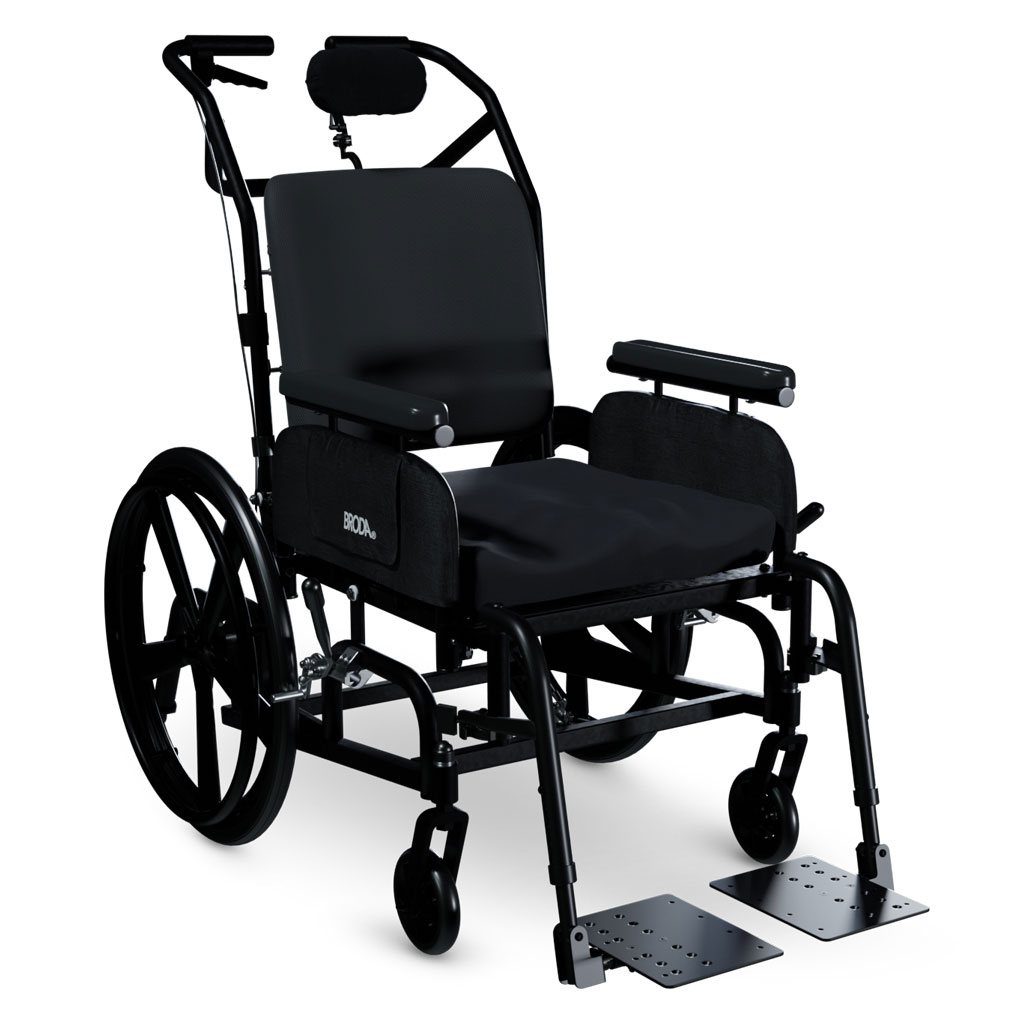
Broda Comfort Rehab Wheelchair with Tilt-in-Space (587)
For paraplegia (loss of movement in the legs) with good arm strength, the Comfort Rehab can be self-propelled on its rear wheels and still tilts up to 45 degrees. It accepts many cushions and backs, so his clinician can choose one for his skin.
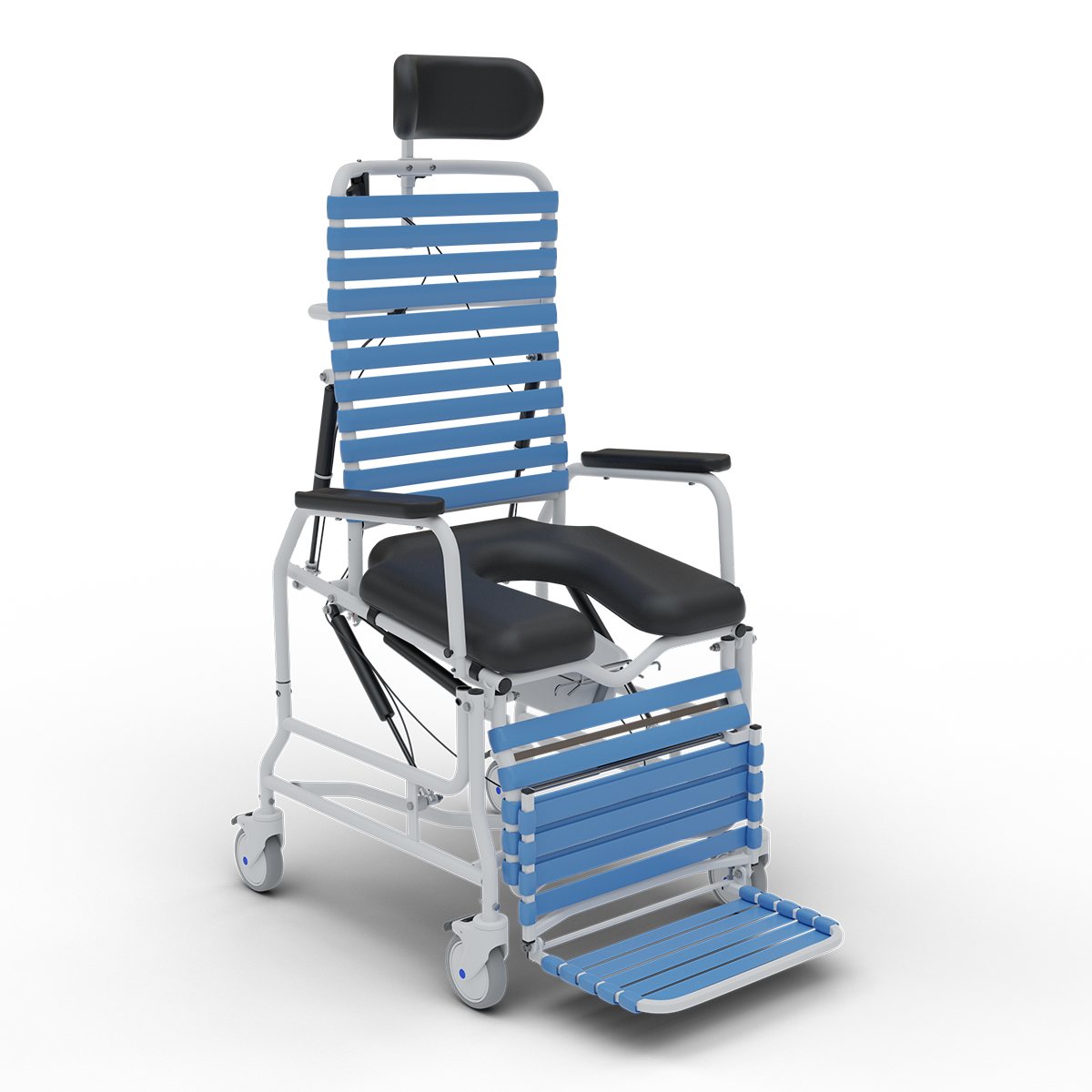
Broda Revive Shower Commode with Tilt & Recline (CS385)
From $3,878.62MSRP
Broda designs the Revive for people who need help with bathing and toileting. It holds up to 400 pounds, reclines far enough for hair washing, and has a strap seat that is simple to clean in the shower.
A seating clinic connected to his spinal cord injury team is a good place for the assessment, with his therapists and an Assistive Technology Professional, or ATP. The level of his injury shapes almost every choice, from how much trunk support he needs to who will operate the tilt. Bring his current cushion and notes on his power chair setup, since the manual chair should match how he already sits. Ask for a recheck after any skin problem, weight change or new spasticity, meaning muscle stiffness or spasms.
Call or send a quote request. Tell us the person's height, weight and diagnosis, and where the chair will be used.
Confirm the model with their therapist or ATP. We send a written quote that lists the exact model, size and options.
We order direct from Broda. The chair ships to any US address. In Arizona, our own crew can deliver it, set it up and fit it.
Paying for the chair
Many families pay privately. Insurance or a public program may help when a doctor, therapist or ATP documents why the person needs the chair. Whether it is covered depends on the plan. Our written quote lists the exact model and options, so it can go straight into that paperwork. Facilities, care organizations and multi-unit buyers can ask us about partner pricing.
Questions families ask about Spinal cord injury
What is the difference between tilt and recline in a wheelchair?
Tilt leans the seat and back together, so his hips and knees keep the same angle. Recline lowers only the backrest, which opens the angle at his hips. Tilt is the one usually used for weight shifts, while recline is handy for dressing and personal care. Many chairs for spinal cord injury offer both.
Do I need a backup wheelchair if he has a power chair?
A backup is worth planning for, because a power chair repair can take time and he still needs a supported seat while it is gone. A manual chair with tilt and recline lets his positioning routine continue. His therapist can help decide which features the backup really needs.
Can someone with paraplegia self-propel a Broda chair?
Yes, with the right model. The Comfort Rehab is self-propelling with rear wheels and tilts up to 45 degrees. Broda's full positioning chairs, including the Synthesis, are pushed by a caregiver, so they suit higher-level injuries or a backup role better than daily independent use.
This guide is general product information, not medical advice. Chair features are described as Broda designs them. Choose seating together with the person's doctor, therapist or ATP.
Call with the person's diagnosis, height and weight, and where they will sit most of the day. We will tell you which Broda chairs fit and send a written quote.