After an amputation, look for a chair that can be rebalanced for the change in body weight, spreads pressure under the remaining limb, and makes transfers simpler.
ADL Solutions, direct Broda Seating reseller. Published .
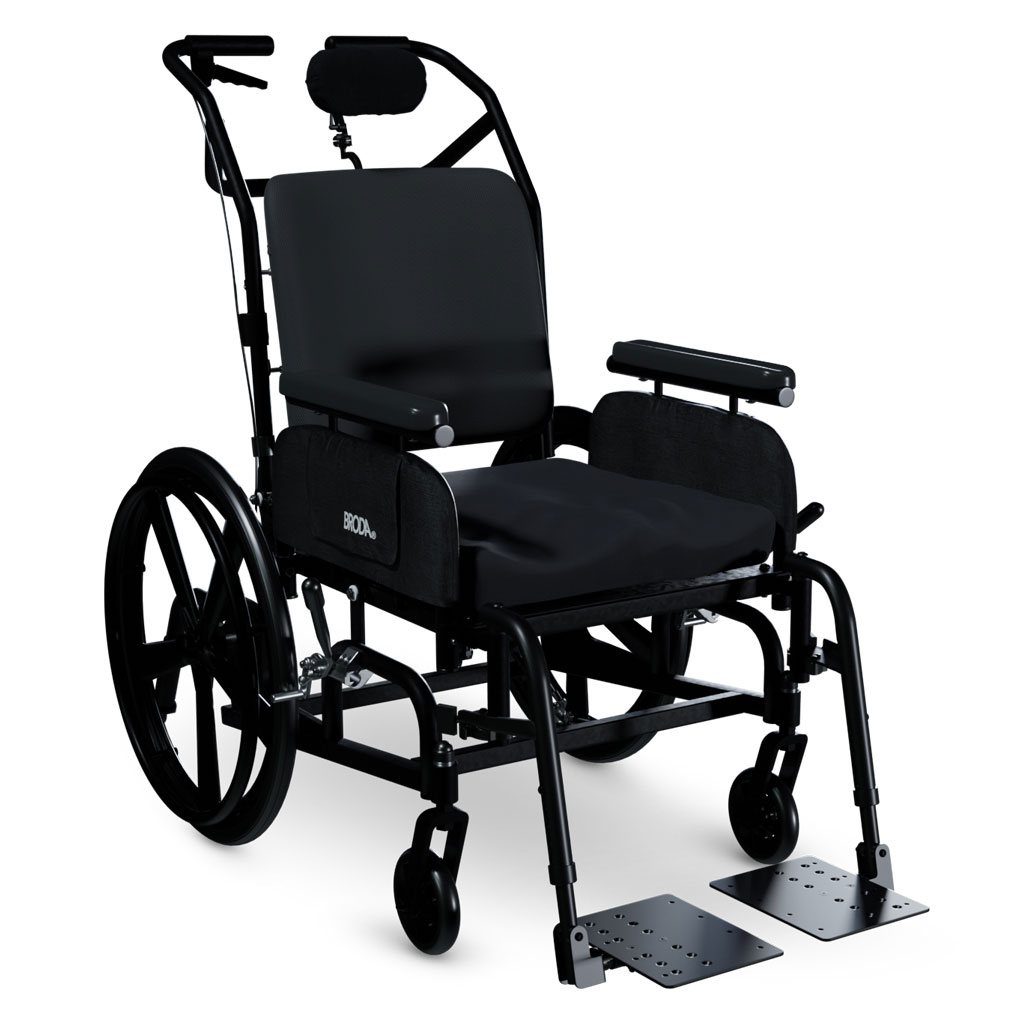
Broda Comfort Rehab Wheelchair with Tilt-in-Space (587)
What matters in a chair after an amputation
Balance after the weight shifts
Losing part of a leg moves the body's weight toward the back of the seat. In a standard wheelchair, that can let the front lift more easily. Broda designs the Comfort Rehab frame so a therapist can adjust the rear wheel position, seat depth and back angle. It also has anti-tippers, small rear wheels designed to catch the chair if it starts to tip backward.
Comfort for the residual limb
The residual limb, meaning the part of the limb that remains after surgery, can be tender, and the skin there needs care. That matters even more when the amputation followed circulation problems or diabetes. Broda's Comfort Tension Seating spreads weight across many separate straps rather than one firm surface, and tilt lets a caregiver move pressure off the seat during the day. Ask the therapist how the residual limb should rest while seated.
Daily life between fittings
Even with a prosthesis, there are stretches without one, such as fittings, repairs and nights. The right chair keeps your father getting to the kitchen and the car during those gaps. Removable arm and leg supports clear the way for a slide board, a smooth plank used to scoot across. A pedal chair with a low seat lets him push with his remaining foot while his hands help.
Broda chairs to consider for limb loss
Prices are Broda's MSRP for the base chair. Size, options and accessories change the final price.
Broda Comfort Rehab Wheelchair with Tilt-in-Space (587)
A self-propelling frame with up to 45 degrees of tilt and anti-tippers. Broda designs it so seat depth, seat height and rear wheel position can be changed, which lets a therapist rebalance the chair after a leg amputation.
Broda Encore Pedal Wheelchair with Tilt & Rocking (48RV4)
From $3,194.94MSRP
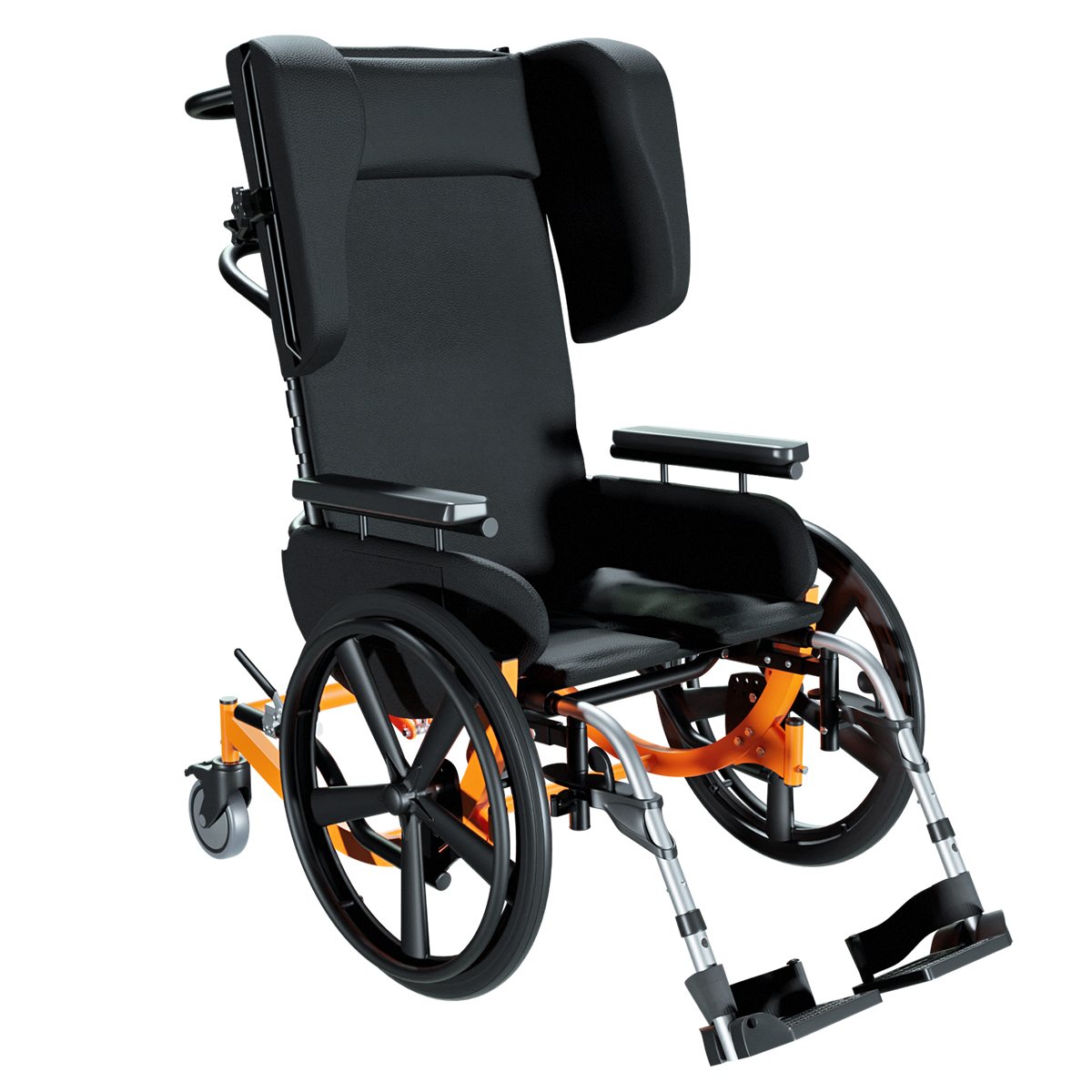
A hemi-height seat, meaning one built close to the floor, so your father can push with his remaining foot. The seat pivots at the front when tilted, which keeps that foot down, and seat heights start at 12.5 inches.
Broda Synthesis Positioning Wheelchair with Tilt & Recline (V4)
From $4,506.40MSRP
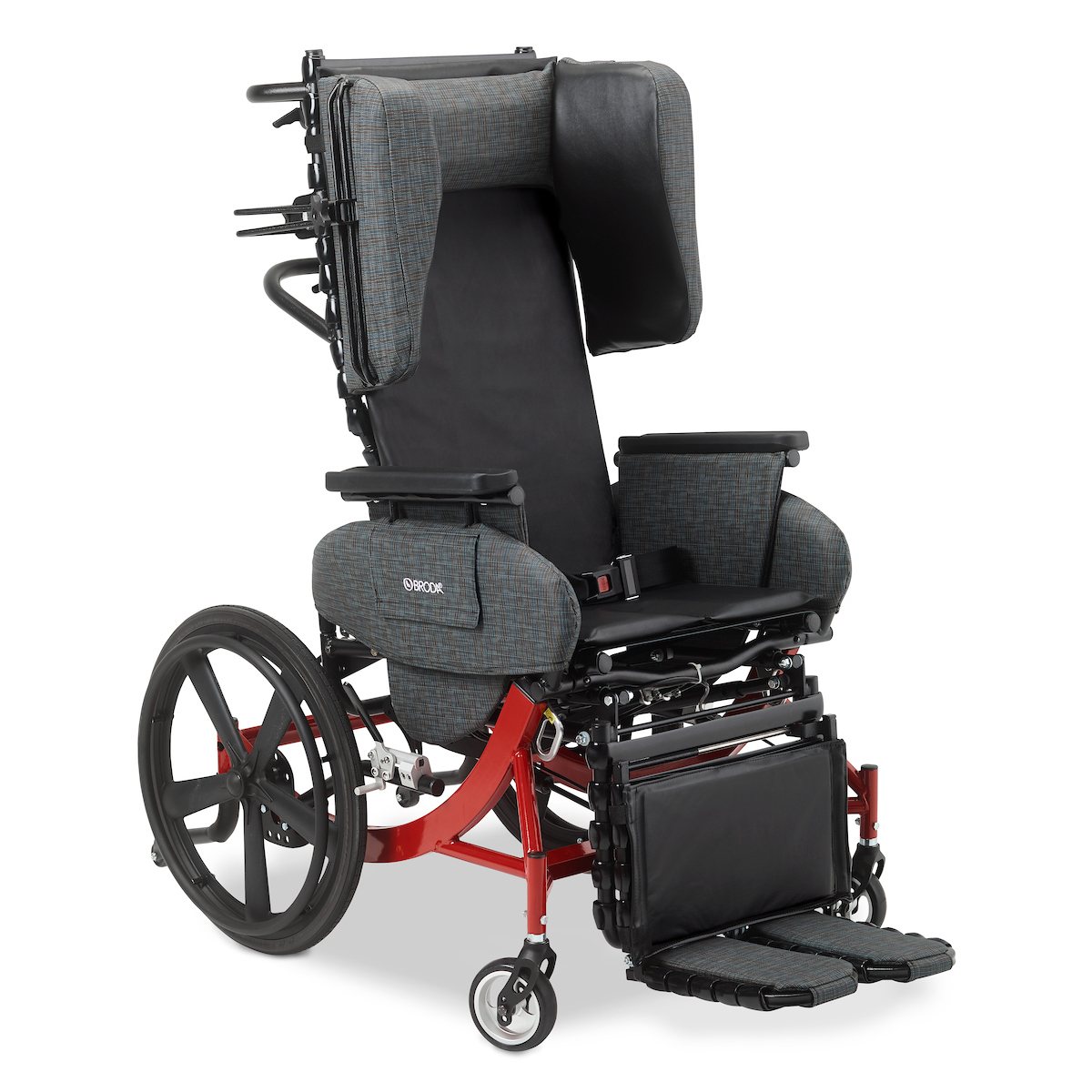
For someone who needs more rest and pressure relief than a self-propelled chair allows. Tilt reaches 40 degrees and recline reaches 90, and an optional WC19 package lets him ride to prosthetic appointments seated in the chair.
Ideally, the physical or occupational therapist, an ATP (assistive technology professional) and the prosthetist all have a say. Measure your father with and without the prosthesis, since seat depth, leg support and balance can differ between the two. Check that the chair stays stable when he leans forward to reach and back to rest. The residual limb can change shape in the months after surgery, and body weight can shift too, so recheck the setup at each prosthetic milestone.
Call or send a quote request. Tell us the person's height, weight and diagnosis, and where the chair will be used.
Confirm the model with their therapist or ATP. We send a written quote that lists the exact model, size and options.
We order direct from Broda. The chair ships to any US address. In Arizona, our own crew can deliver it, set it up and fit it.
Paying for the chair
Many families pay privately. Insurance or a public program may help when a doctor, therapist or ATP documents why the person needs the chair. Whether it is covered depends on the plan. Our written quote lists the exact model and options, so it can go straight into that paperwork. Facilities, care organizations and multi-unit buyers can ask us about partner pricing.
Questions families ask about limb loss
What kind of wheelchair is best for a leg amputee?
Look for a frame that can be rebalanced, usually by moving the rear wheels or adding anti-tippers, and seating that spreads pressure evenly. If he will push himself, a low seat lets him use his remaining foot. A therapist or ATP should set up the chair while watching him sit, lean and transfer.
Can you propel a wheelchair with one foot?
Yes. Pedal chairs, also called hemi-height chairs, sit low so a foot reaches the floor, and many people combine one foot with one or both hands. Broda's Encore and Sashay are built this way, and their seats pivot at the front during tilt so the foot stays planted.
Why does a wheelchair feel tippy after a leg amputation?
Legs carry a fair share of body weight. Without part of one or both, the body's weight sits further back over the rear wheels, so the chair can tip backward more easily. Moving the rear wheels or adding anti-tippers can correct the balance. Have a therapist make that change rather than adjusting it yourself.
This guide is general product information, not medical advice. Chair features are described as Broda designs them. Choose seating together with the person's doctor, therapist or ATP.
Call with the person's diagnosis, height and weight, and where they will sit most of the day. We will tell you which Broda chairs fit and send a written quote.