ADL Solutions, direct Broda Seating reseller. Published .
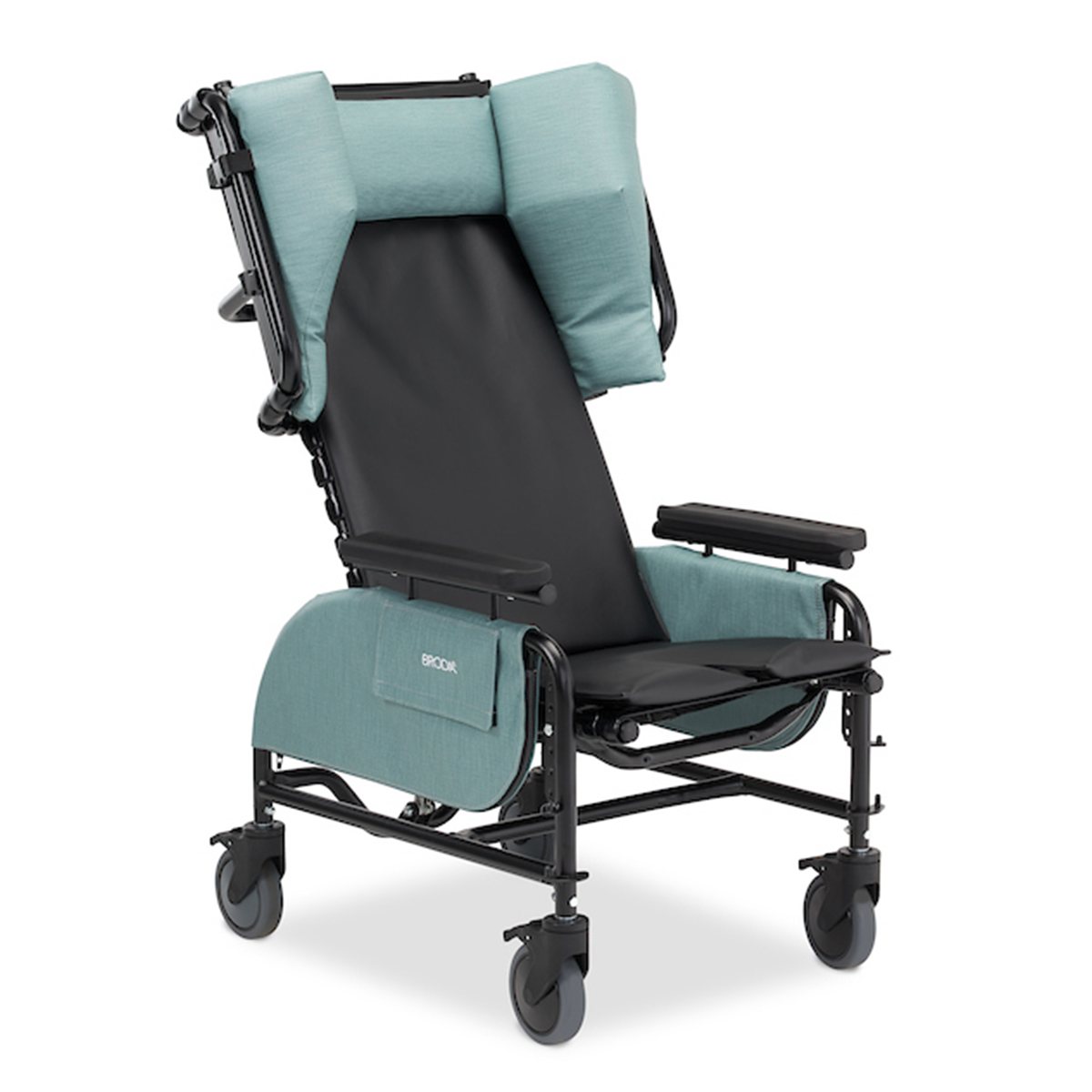
Broda Sashay Pedal Wheelchair with Tilt (48)
What matters in a chair for an aging parent
Getting in and out safely
Transfers, meaning the move between the bed, toilet or recliner and the wheelchair, are where many families feel least sure of themselves. Broda arm and leg supports swing out of the way, leaving an open side so your mother can turn and sit without stepping around metal. Seat height matters as well. Too high and her feet dangle during the pivot. Too low and standing back up takes more effort.
Comfort through long hours
Thinner skin and less padding over the hips can make long hours in a sling seat hard on an older body. Broda's Comfort Tension Seating uses a set of individual straps that shape to the body and let air pass beneath it. Tilt-in-space lets a caregiver rock the seat and back together, moving weight from the bottom toward the back without changing how your mother's hips and knees are bent.
Moving under their own power
Plenty of older adults can still get across a room with their feet even when their arms tire quickly. Broda's pedal chairs sit low so the heels reach the floor, and when the seat tilts it pivots at the front, so the feet stay down. Being able to roll to the window or the dining table on her own keeps some choice in your mother's day.
Broda chairs to consider for aging
Prices are Broda's MSRP for the base chair. Size, options and accessories change the final price.
Broda Sashay Pedal Wheelchair with Tilt (48)
From $2,214.86MSRP
A straightforward pedal chair for a parent who still gets around by hand or foot. Seat heights start at 12.5 inches, tilt goes to 18 degrees for a gentle rest, and Broda rates it to 350 lb.
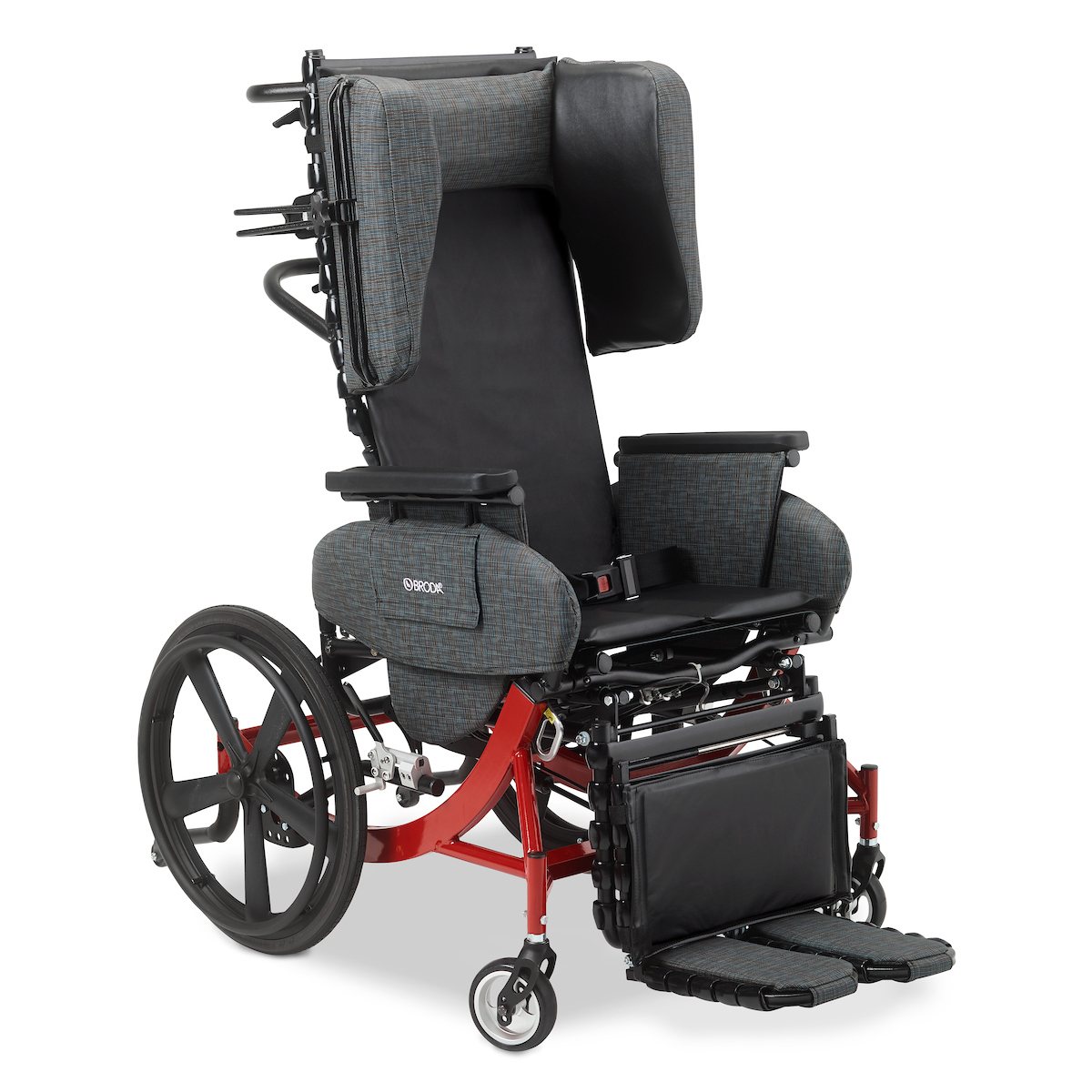
Broda Synthesis Positioning Wheelchair with Tilt & Recline (V4)
From $4,506.40MSRP
For a parent who now sits most of the day. Broda designs the Synthesis to tilt as far as 40 degrees and recline to 90, with an optional WC19 kit (a crash-test standard) for riding to appointments seated in the chair.
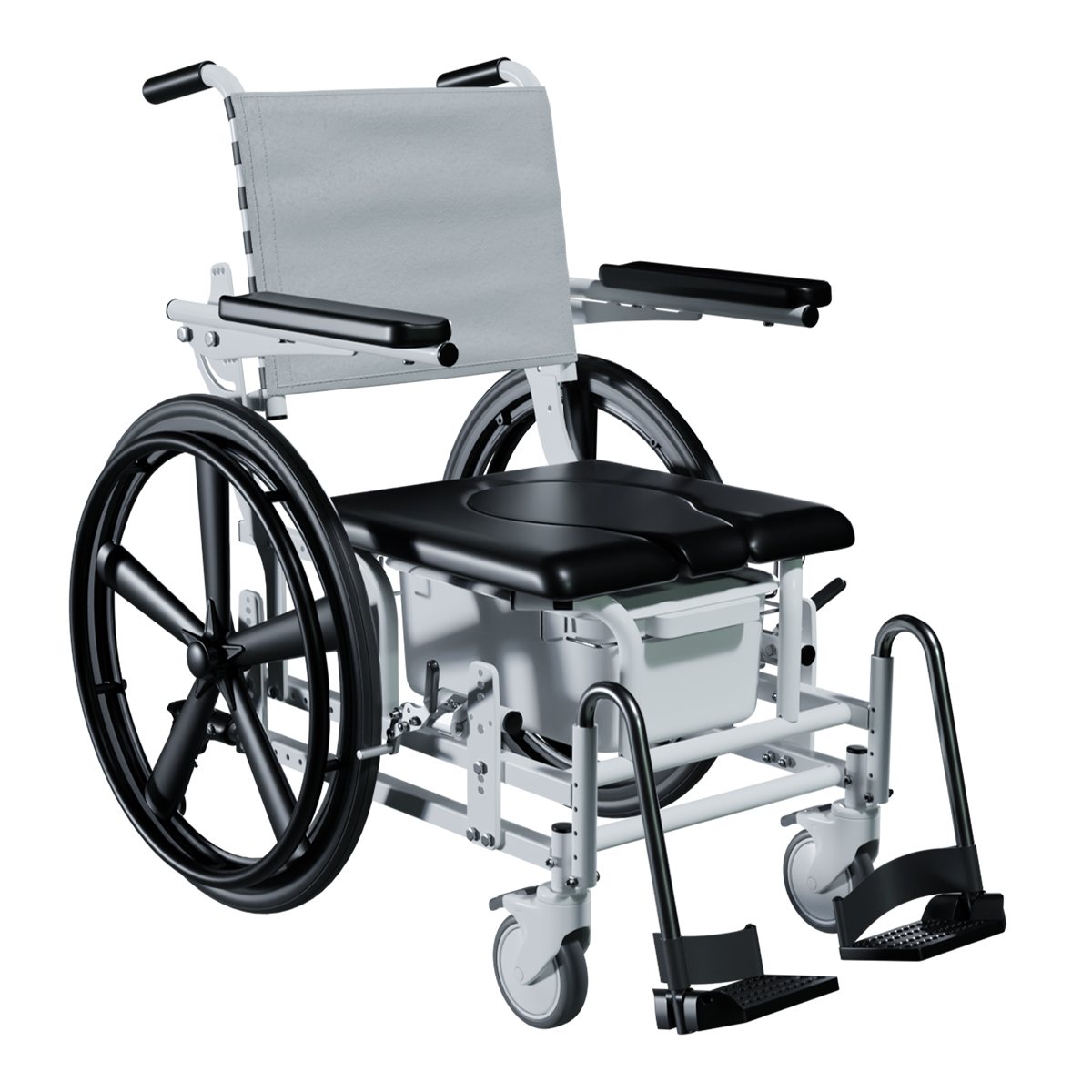
For a parent who still bathes with some independence. The Sentinel is a stainless steel shower commode the user can roll on their own, with a fabric back whose tension adjusts, rated to 300 lb.
Ask your parent's physical or occupational therapist, or an ATP (a specialist in assistive equipment), to see them seated before you order. Measure across the widest part of the hips, from the back of the hips to behind the knee, and from the floor to the back of the knee with shoes on. Once the chair arrives, watch for sliding forward, leaning to one side, or red marks that stay after sitting. A hospital stay, a fall or a change in weight is a good reason to recheck the fit.
Call or send a quote request. Tell us the person's height, weight and diagnosis, and where the chair will be used.
Confirm the model with their therapist or ATP. We send a written quote that lists the exact model, size and options.
We order direct from Broda. The chair ships to any US address. In Arizona, our own crew can deliver it, set it up and fit it.
Paying for the chair
Many families pay privately. Insurance or a public program may help when a doctor, therapist or ATP documents why the person needs the chair. Whether it is covered depends on the plan. Our written quote lists the exact model and options, so it can go straight into that paperwork. Facilities, care organizations and multi-unit buyers can ask us about partner pricing.
Questions families ask about aging
What is the most comfortable wheelchair for an elderly person?
It depends on how many hours they sit and how much they can do for themselves. Someone who still gets around may be happiest in a pedal chair they can move with their feet. Someone who sits most of the day often needs tilt and recline. A therapist who sees your parent seated can point you to the right type.
What is the difference between a tilt wheelchair and a reclining wheelchair?
Tilt rocks the seat and back together, so body angles stay the same while weight moves toward the back. Recline opens only the backrest, like a lounge chair. Recline alone can let some people slide toward the front of the seat, which is one reason positioning chairs often pair it with tilt.
How do I know if my mom needs a positioning wheelchair?
Families often notice sliding down in a standard chair, leaning to one side, or needing to be pulled back up several times a day. Those are good reasons to ask her doctor or therapist for a seating assessment. A positioning chair adds adjustable tilt and recline so the seat can be set to her body.
This guide is general product information, not medical advice. Chair features are described as Broda designs them. Choose seating together with the person's doctor, therapist or ATP.
Call with the person's diagnosis, height and weight, and where they will sit most of the day. We will tell you which Broda chairs fit and send a written quote.