After a stroke, a low-seated pedal wheelchair lets your father steer with his stronger hand and foot, and tilt gives him a way to rest when fatigue sets in.
ADL Solutions, direct Broda Seating reseller. Published .
Broda Encore Pedal Wheelchair with Tilt & Rocking (48RV4)
What matters in a chair after a stroke
One strong side does the work
Many strokes leave one side of the body weaker, which is called hemiparesis. Pushing a standard chair with one arm tends to send it in circles. A hemi-height chair sits low enough for his stronger foot to pull along the floor while his stronger hand works the wheel, which helps him hold a straight line. Broda's pedal chairs let you set the seat-to-floor height for this.
Staying centered in the seat
Weakness on one side often shows up as leaning toward that side or sliding down in the chair. A small amount of seat tilt lets him rest back into the chair rather than working to stay upright. Front-pivot tilt on Broda pedal chairs keeps his foot on the floor while tilted, so he can still move himself. Ask the therapist about support for the weaker arm, too.
Fatigue after a stroke
Tiredness after a stroke can be heavy and hard to predict. A chair he can propel on good days and you can push on hard ones makes it easier for him to stay at meals and family visits. For appointments, a chair with a WC19 rating (crash-tested for use as a seat in a vehicle) lets him ride in an equipped van without a transfer.
Broda chairs to consider for Stroke
Prices are Broda's MSRP for the base chair. Size, options and accessories change the final price.
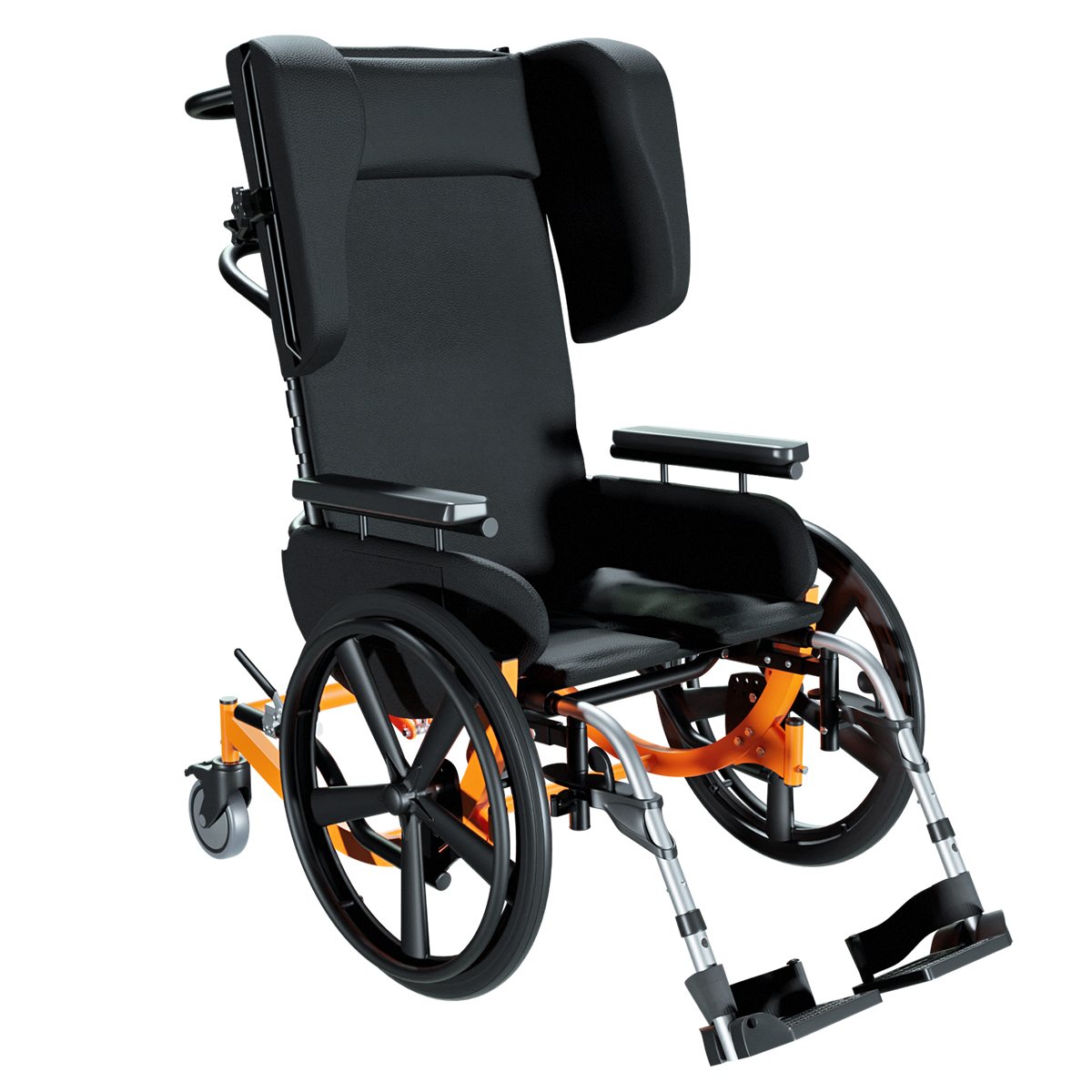
Broda Encore Pedal Wheelchair with Tilt & Rocking (48RV4)
From $3,194.94MSRP
Broda designs the Encore Pedal as a hemi-height chair. The seat sets from 12.5 to 19 inches off the floor so his stronger foot can reach, and front-pivot tilt keeps that foot down while he rests back. Gentle rocking is optional.
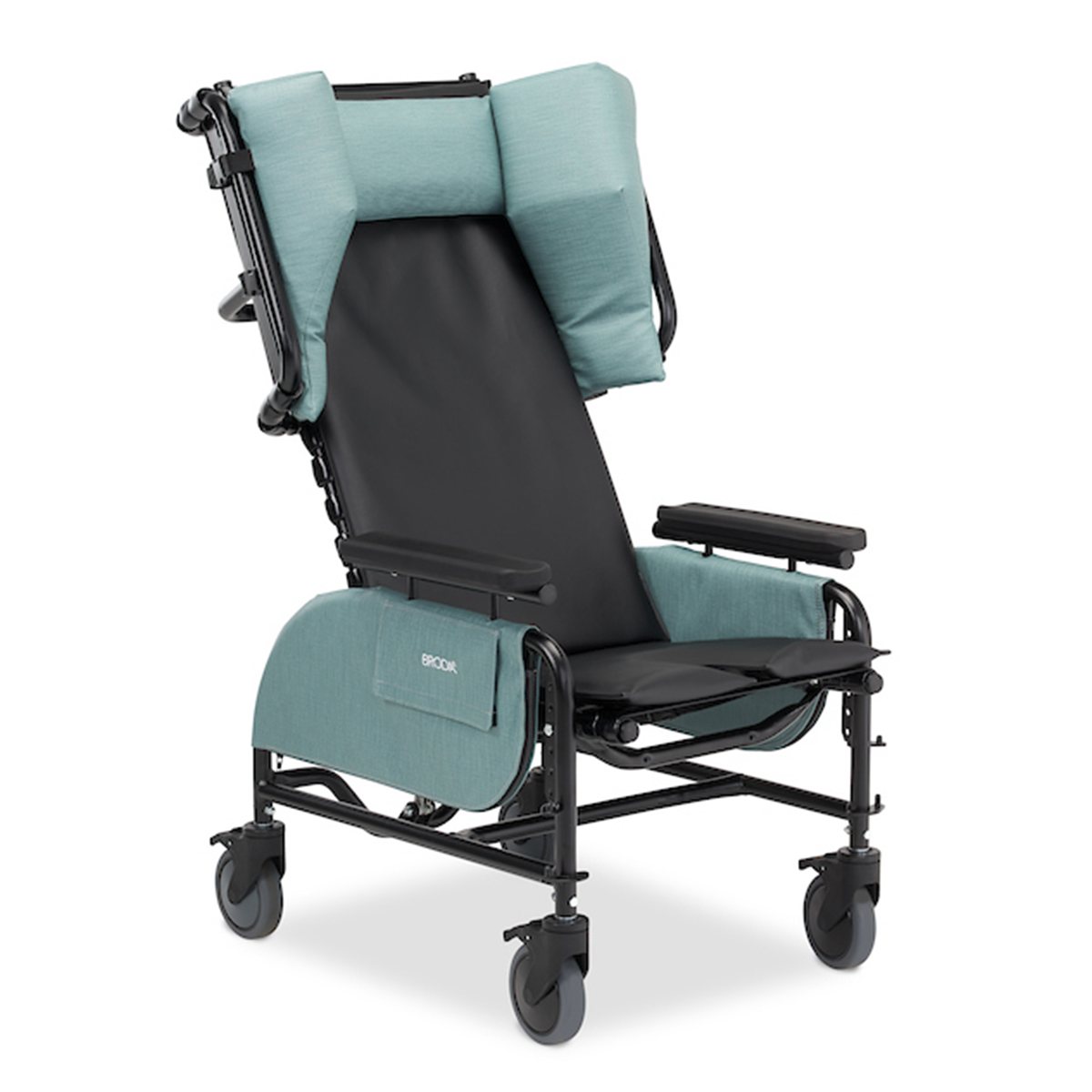
A simpler pedal option. The Sashay can be propelled with one hand and one foot, holds up to 350 pounds and tilts as far as 18 degrees, with seat-to-floor heights from 12.5 to 17.5 inches.
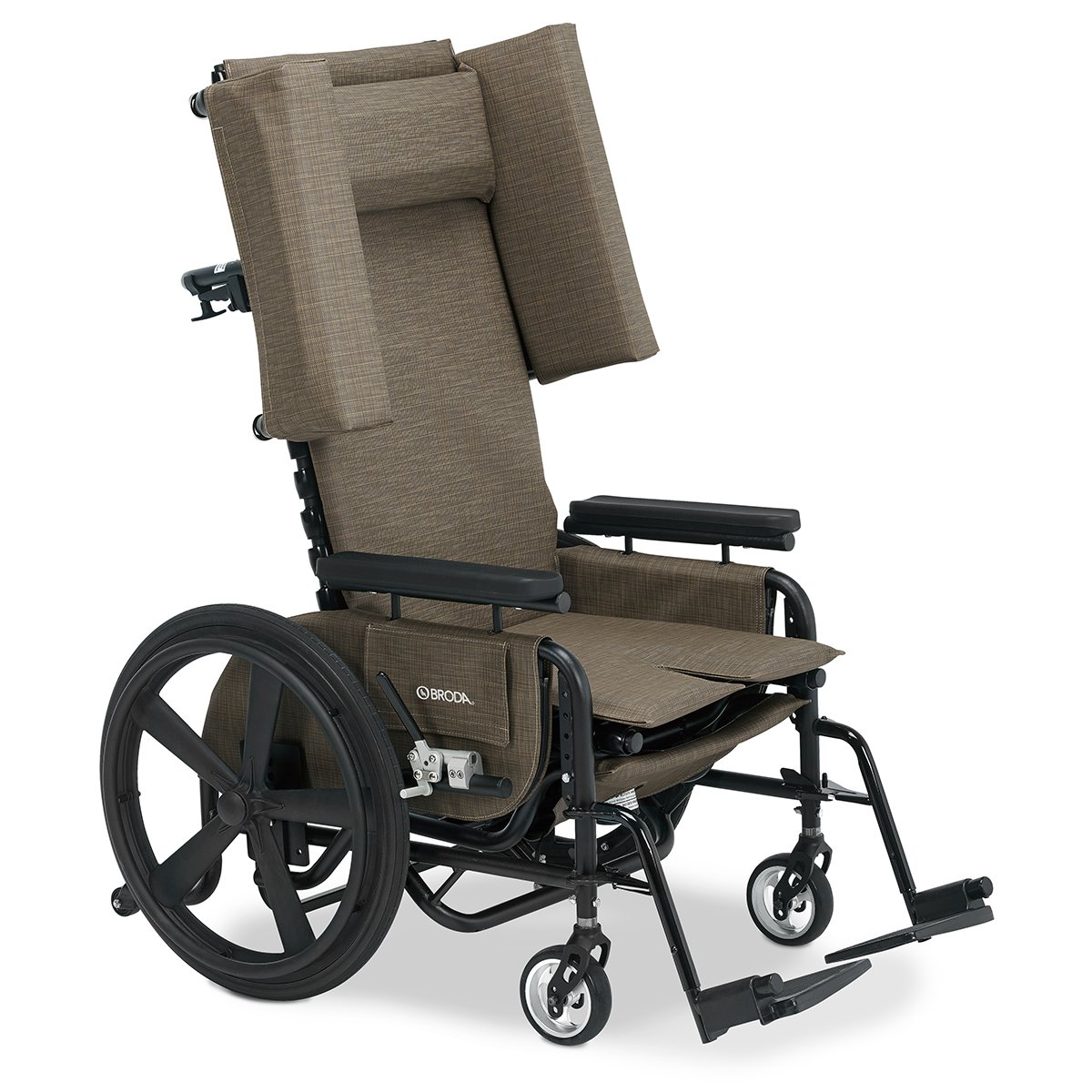
Broda Latitude Pedal Wheelchair with Tilt & Rocking (48R)
From $2,602.47MSRP
If he needs more tilt for rest, the Latitude Pedal tilts up to 33 degrees and keeps the low seat (14 to 19 inches from the floor) for foot propulsion, with a gentle rocking motion built in.
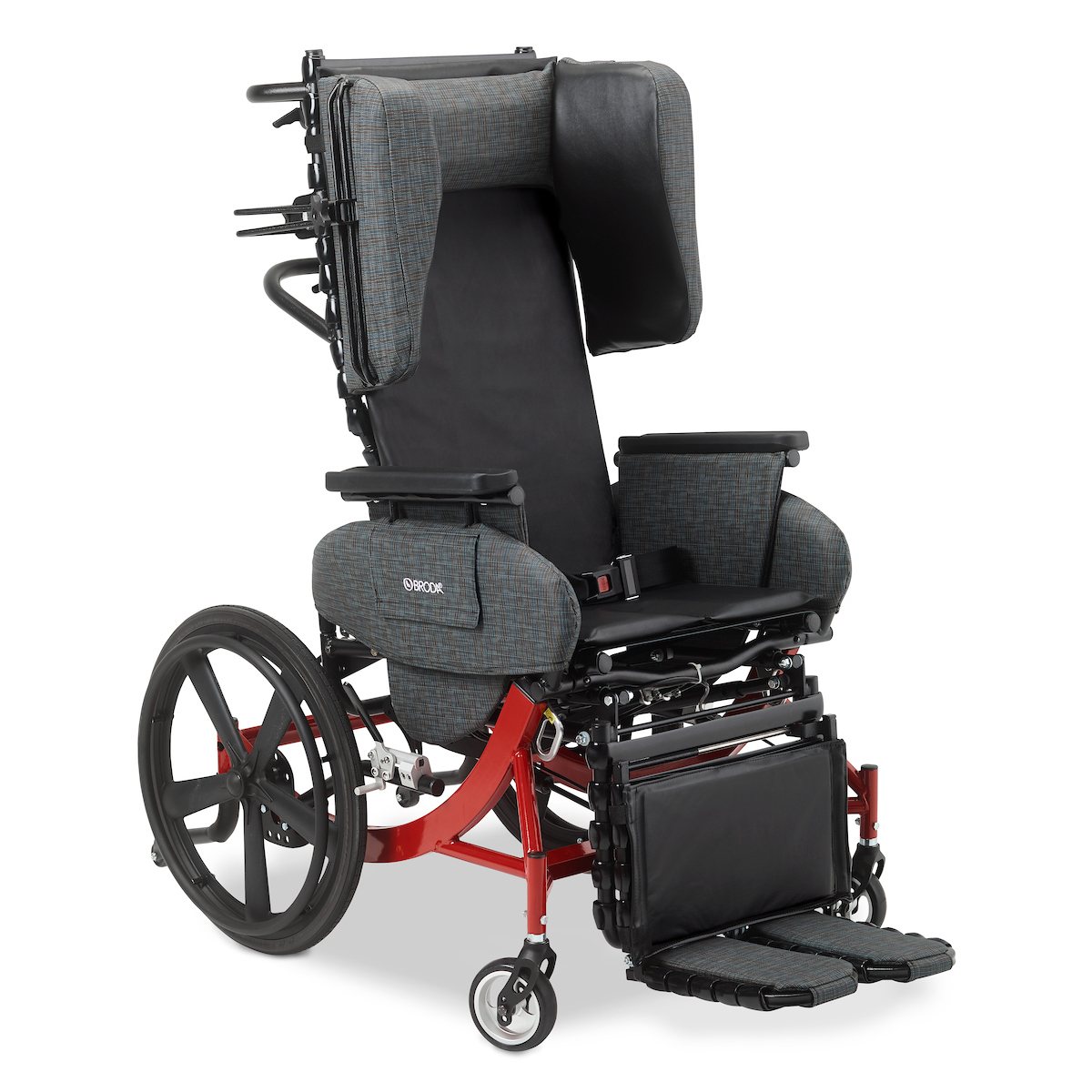
Broda Synthesis Positioning Wheelchair with Tilt & Recline (V4)
From $4,506.40MSRP
If the stroke left him needing full support, the Synthesis has a 40-degree tilt and a backrest that reclines to 90 degrees. Broda offers WC19 crash-tested tie-down brackets and a belt as an option, so he can ride in an equipped van.
An occupational or physical therapist from his stroke rehab team, ideally working with an ATP (Assistive Technology Professional), should help choose and set up the chair. The key measurement for foot propulsion is seat-to-floor height, taken with the shoes he will wear, so his stronger heel rests flat. Seat width should be snug enough that he has little room to drift sideways. Notice where the weaker arm ends up over the course of the day. Needs after a stroke often change during the first months, so plan to adjust the setup as he does.
Call or send a quote request. Tell us the person's height, weight and diagnosis, and where the chair will be used.
Confirm the model with their therapist or ATP. We send a written quote that lists the exact model, size and options.
We order direct from Broda. The chair ships to any US address. In Arizona, our own crew can deliver it, set it up and fit it.
Paying for the chair
Many families pay privately. Insurance or a public program may help when a doctor, therapist or ATP documents why the person needs the chair. Whether it is covered depends on the plan. Our written quote lists the exact model and options, so it can go straight into that paperwork. Facilities, care organizations and multi-unit buyers can ask us about partner pricing.
Questions families ask about Stroke
Which wheelchair suits a stroke patient best?
For many people with one-sided weakness, a hemi-height or pedal wheelchair is the usual starting point, because the low seat lets the stronger foot help propel and steer. Tilt adds a way to rest. After a more severe stroke, a full positioning chair with tilt and recline may suit better. His therapist can say which.
Can someone propel a wheelchair with one hand after a stroke?
Yes, usually by pairing the stronger hand with the stronger foot. The hand turns the wheel on that side, and the foot pulls along the floor to add power and keep the chair straight. This works well only when the seat is low enough for his heel to rest flat, so his therapist sets the height and teaches the method.
Will using a wheelchair hold back his recovery after a stroke?
His therapy team can answer that for his situation. A wheelchair and walking practice are often used side by side: the chair handles long distances, and therapy sessions focus on walking. A chair he can propel himself also keeps him moving under his own power between sessions.
Can he ride in a car in his wheelchair?
Only in a vehicle equipped with wheelchair tie-downs, and only in a chair rated for it. The Synthesis is one Broda chair with an optional WC19 crash-tested package for this use. If he can transfer safely, he can ride in a regular seat while the chair travels separately.
This guide is general product information, not medical advice. Chair features are described as Broda designs them. Choose seating together with the person's doctor, therapist or ATP.
Call with the person's diagnosis, height and weight, and where they will sit most of the day. We will tell you which Broda chairs fit and send a written quote.